Our AI analyzes your space and preferences to generate personalized design recommendations. It considers factors like dimensions, lighting, style preferences, and functionality needs.
Wall Changer AI
Wall Changer AI is a free AI tool that lets you change wall materials, colours and finishes in your own photo with AI. Preview paint, tile, stone, brick, panelling and wallpaper before you commit. Free to try.
Free to try · first generation free on signup · no credit card
1
Step 1
Upload Image
Start by uploading image
Upload your image
Click to browse or drag & drop
2
Step 2
Options
Configure your options
Output quality:
AI Studio
AI Design Studio
Select a design mode from the sidebar to begin
Interior Design
Redesign rooms and spaces
Exterior Design
Transform facades and landscapes
Architecture
Create floor plans and structures
Popular in Home Design Studio
Paint My House AIExterior House Paint AIAI Kitchen DesignAI Bathroom DesignAI Bedroom DesignFree AI Architecture GeneratorAI Interior Design From a PhotoAI Landscaping DesignHome Color Combination AIAI Curb Appeal RaterAI Interior Design RaterAI House Style IdentifierAI Renovation Cost EstimatorAI Day to Dusk Photo EditingAI Declutter Room PhotosAI Home Addition VisualizerAI Home Design Tools Compared
Quick facts about Wall Changer AI
- Tool nameWall Changer AI
- PriceFree to try
- InputPhoto upload
- OutputAI-generated image
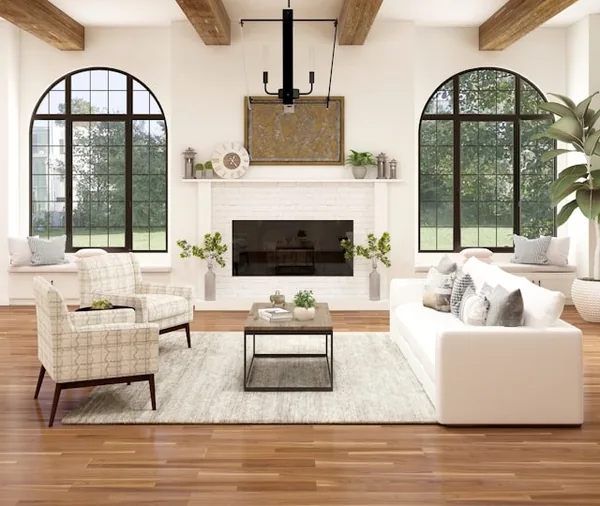
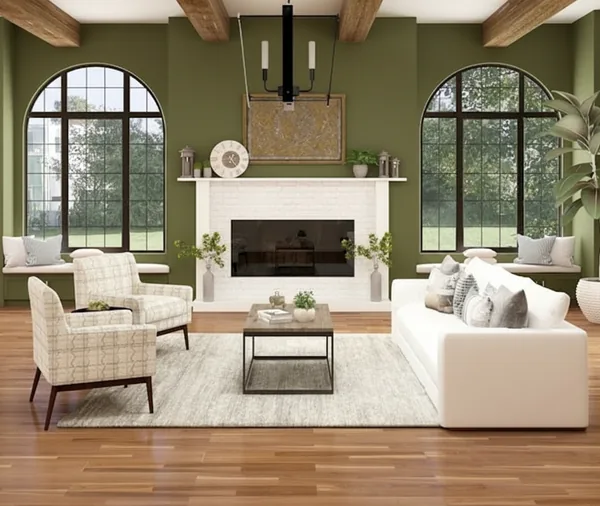
Upload a photo of a wall and preview paint, tile, stone, brick, panelling or wallpaper on it before you buy a single sample pot or a single box of tile. The tool keeps your room's layout, furniture, windows and trim exactly as photographed — only the wall surface changes — so what you see is what the wall will actually look like next to everything already in the room.
Free to try · results in about 30 seconds · no card required
Six wall materials, and what each one actually does to a room
The right material depends less on taste and more on what the wall is doing in the room — is it a feature wall, a hardworking kitchen backsplash, or an entire room's worth of surface. The six options below cover most residential and commercial jobs.
1
Paint
The cheapest and most reversible option, and still the one that does the most work per dollar. Matte finishes hide small drywall imperfections; satin and eggshell hold up better to cleaning in kitchens and hallways; gloss reflects the most light but also shows every surface flaw, so it rewards a wall that's already smooth. Paint is also the fastest way to test a color direction for a whole room before committing to a more expensive material elsewhere.
2
Tile
Tile reads as permanent and wipeable, which is why it dominates kitchen backsplashes and bathrooms rather than living rooms. Grout line color and width change the look as much as the tile itself — thin grout lines in a matching color read as one continuous surface, while contrasting grout breaks the wall up into a visible grid. Large-format tile with few grout lines tends to make a small wall feel calmer than a busy mosaic pattern.
3
Natural stone
Stone (stacked slate, travertine, exposed brick-adjacent limestone) reads as the most expensive material even when it isn't, because of the texture and irregularity real stone has that manufactured products struggle to fake. It works best as a feature wall behind a fireplace or headboard rather than across an entire room, since floor-to-ceiling stone on every wall can visually shrink a space rather than elevate it.
4
Brick
Exposed or faux brick brings warmth and texture and reads especially well in loft-style, industrial, or older-home interiors. A full brick wall is a strong, permanent-feeling statement; a partial brick treatment — just the lower half, or just around a fireplace — gives some of that texture without making the whole room feel like a warehouse.
5
Panelling
Wood panelling (shiplap, board-and-batten, wainscoting, slatted wood) adds dimension and shadow lines that flat paint or wallpaper can't. It is one of the few wall treatments that looks intentional at partial height — panelling to chair-rail or waist height, with paint or wallpaper above, is a classic combination precisely because the panelling grounds the room while the lighter surface above keeps it from feeling heavy.
6
Wallpaper
Wallpaper is the fastest way to bring in pattern, scale, and printed detail that paint and material swaps can't. A large-scale pattern reads dramatically different at a distance than close up, which is exactly why testing it on your actual wall — where you'll actually stand and view it from — matters more for wallpaper than for almost any other material on this list.
Texture and light: why the same material looks different on different walls
Direction and intensity of light hitting a wall changes how a material reads more than the material choice itself. A wall that gets strong side light from a nearby window will exaggerate the texture of stone, brick, or panelling — every groove and ridge throws its own shadow — while the same material on a wall lit only by overhead ambient light looks flatter and less dimensional. This is one of the reasons a swatch held under a showroom light can look completely different once installed in your actual room.
Glossy and reflective finishes (gloss paint, glazed tile, polished stone) bounce more of the room's existing light around, which can help a dim room feel brighter but will also reflect back anything visually busy nearby, like a cluttered opposite wall. Matte and textured finishes (matte paint, brushed stone, raw brick, most wallpaper) absorb more light and read calmer, at the cost of not helping a dark room feel lighter.
Because light direction is baked into your uploaded photo, previewing a material on your own wall photo — rather than judging it from a manufacturer's studio-lit sample photo — is the only way to see how it will actually look at the time of day you photographed it.
Working around trim, outlets, and fixed elements
A wall is rarely a blank rectangle — baseboards, crown moulding, door and window trim, outlets, switch plates, and mounted fixtures all interrupt the surface, and how a material handles those interruptions is often the deciding factor between materials that look similar in a catalog photo. Paint is the most forgiving here: it simply follows the existing trim lines, and repainting trim a contrasting or matching color is a separate, cheap decision made after the wall color is set.
Tile and stone need the interruptions planned around rather than painted over — outlet covers typically get swapped for material-matched or flush plates, and trim usually gets removed rather than tiled up to, with the tile itself becomes the new edge. Panelling has the opposite issue: it adds thickness to the wall, so door and window trim, and anything wall-mounted like a light switch or a shelf bracket, needs enough reveal depth to still sit flush once the panelling goes up.
Wallpaper is the most sensitive to interruptions of all six, since a printed pattern has to line up (or be deliberately mismatched) across a switch plate, an outlet, or a corner — a large-repeat pattern on a wall with a lot of trim and outlets will show more seams and pattern breaks than the same paper on a clean, uninterrupted wall. Previewing on your actual photo — trim, outlets and all — surfaces these issues before you've bought the material, not after.
Comparing materials on your own wall before you buy
Every material above can look right in a showroom and wrong once it's next to your actual furniture, floor tone, and light. Run the same wall photo through two or three materials — say, paint versus a partial panelling treatment versus tile in a kitchen — before ordering samples, so the in-person sample stage narrows down two finalists instead of starting from a blank slate.
This tool changes the wall surface only. It is not a structural plan, and any load-bearing changes, plumbing behind a tiled wall, or electrical work around switches and outlets still needs a licensed contractor.
More Wall Changer AI tools
Popular on AI Two
New AI tools for Wall Changer AI
⚡
Wall Changer AI
Upload your imageTap anywhere here — your AI design will appear in this space after you generate.JPG · PNG · WebP
Output quality:
Frequently Asked Questions
Yes! All AI-generated designs can be customized. You can adjust colors, materials, layouts, and specific elements to match your exact preferences.
We support all common image formats including JPG, PNG, WebP, and more. High-resolution images produce the best results.
Our AI creates photorealistic designs that accurately represent how your space would look with the proposed changes. The results are suitable for planning and visualization purposes.