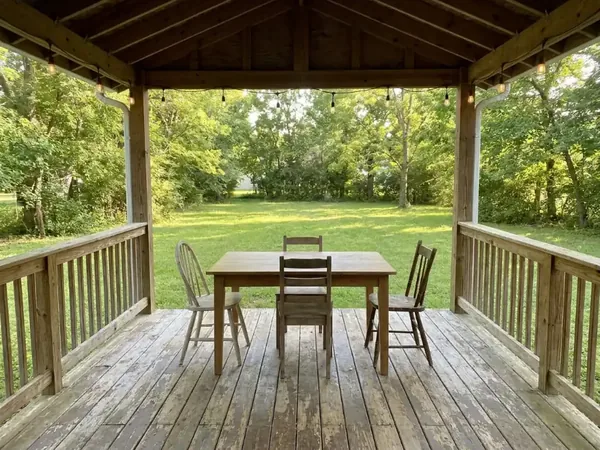
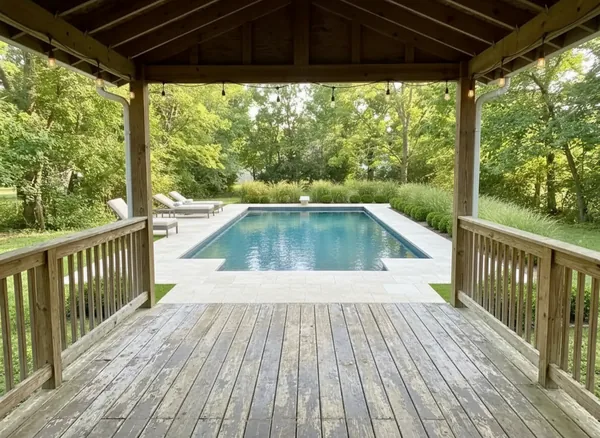
Rectangular, kidney, freeform, L-shaped, circular and infinity edge pools. Try more than one shape against your actual yard photo before deciding — the same footprint can look very different once it is placed in your space.
AI Pool Design
AI Pool Design is a free AI tool. Free AI pool designer - Design swimming pools and water features for your backyard. Visualize pool shapes, styles, and features before building.
Free to try · first generation free on signup · no credit card
1
Step 1
Select Mode
Choose your transformation style
Generate pool designs from text description
2
Step 2
Options
Configure your options
Output quality:
Mode
Generate Pool Concept
Your AI Design Will Appear Here
Fill in the options on the left, then press Generate.
Upload your image
Drag & drop your file here or click to browse
JPG, PNG, WebP
Max 10MB
AI Ready
Popular in Home Design Studio
Paint My House AIExterior House Paint AIAI Kitchen DesignAI Bathroom DesignAI Bedroom DesignFree AI Architecture GeneratorAI Interior Design From a PhotoAI Landscaping DesignHome Color Combination AIAI Curb Appeal RaterAI Interior Design RaterAI House Style IdentifierAI Renovation Cost EstimatorAI Day to Dusk Photo EditingAI Declutter Room PhotosAI Home Addition VisualizerAI Home Design Tools Compared
Quick facts about AI Pool Design
- Tool nameAI Pool Design
- CategoryHome Design
- PriceFree to try
- InputText prompt
- OutputAI-generated image
A pool is one of the most expensive and least reversible additions you can make to a backyard, and most homeowners only ever see it as a flat 2D drawing from a contractor's quote. This tool lets you place a pool into your actual yard photo first — shape, surround material, water features and all — so you are choosing a design you have actually looked at, not one you are imagining from a sketch.
Free to try · results in about 30 seconds · no card required
Choosing a pool shape that fits the yard, not just the brochure
Rectangular pools are the default for a reason: they use the available yard width efficiently, they are the cheapest shape to engineer and line, and they read as "serious swimming pool" rather than decorative water feature. If the yard is long and narrow, a rectangle almost always looks more intentional than a freeform shape squeezed into the same footprint.
Kidney and freeform shapes soften a yard that has a lot of hard landscaping around it — patio, retaining walls, a straight-edged house. They also tend to leave more usable lawn or deck space at the corners than a rectangle of the same water surface area, because the curves eat into the pool rather than the yard.
Infinity edge pools need a slope or a view to justify themselves — the visual trick only works when the horizon beyond the edge drops away. On a flat suburban lot with a fence six feet past the coping, an infinity edge just looks like a pool with an expensive wall hidden behind it, so it is worth testing on your actual photo before committing to the engineering cost.
Water features and add-ons: what earns its keep
A waterfall or rock feature does real work beyond looks — the sound of moving water masks street noise and neighbouring yards, which matters more in a tight suburban lot than in a rural one. It is also one of the pricier add-ons, since it usually means a raised structure and its own pump and plumbing separate from the main pool circulation.
An attached spa is worth visualizing at actual scale before assuming it fits — spas need their own bench seating and jets, and a spa that looks generously sized in a rendering can turn out to eat a third of a small pool's footprint once you see it against the real yard dimensions.
Tanning ledges (a shallow shelf a few inches underwater, right at the pool edge) are popular for a reason: they turn part of the pool into usable lounging space without adding deck. They are also one of the easiest features to misjudge on paper, because their proportions only make sense once you see them against the rest of the pool at scale.
Surround materials: matching the deck to the house, not just the pool
Concrete deck is the affordable, low-maintenance default — it can be poured in almost any color and texture, including stamped patterns that mimic stone, and it is what most contractor quotes default to unless you specify otherwise. Its downside is heat: light-colored concrete stays walkable barefoot longer than dark concrete in full sun.
Natural stone (travertine, flagstone, limestone) reads as the premium option and tends to stay cooler underfoot than concrete, which matters directly next to a pool where people are barefoot and wet. It costs more both in material and installation, and irregular stone needs more careful leveling around the coping.
Wood deck around a pool works best when it is the same species and finish as decking used elsewhere on the property — matching the pool surround to an existing deck reads as one coherent outdoor space rather than two separate projects bolted together. Composite decking is worth checking against pool chemicals specifically, since chlorine splash and pool chemical spills can discolor some composite boards over time.
What a render is for, and what it is not
This tool is for deciding on shape, style, features and surround material before you talk to a pool builder — it shows you what an idea looks like in your own yard instead of asking you to imagine it from a brochure photo of someone else's pool.
It is not a construction plan, an engineering drawing, or a permit document. Pool depth, drainage, structural engineering, electrical bonding and local setback rules all need a licensed pool contractor and, in most jurisdictions, a permit — none of that is decided by an image.
Use the render to walk into a contractor conversation with a clear shape and material preference already chosen, which tends to produce a faster, more specific quote than starting the conversation from a blank page.
✨
AI Pool Design
Generate pool designs from text description
Be specific for better results0/400
Output quality:
Frequently Asked Questions
Yes. You can add waterfalls, rock features, an attached spa, a swim-up bar, a slide or diving board, and a tanning ledge to your pool design.
Upload a photo of your backyard and the AI places and visualizes the pool in your space, keeping the house, fence and yard boundaries as photographed.
Yes. Run the same pool shape with concrete, natural stone and wood deck surrounds to compare how each reads against your house before you commit to one.
No. It is a visualization for exploring shape, style and features. Actual depth, structural engineering, drainage, electrical bonding and permits need a licensed pool contractor and local approval.
Usually not convincingly — the infinity effect relies on a slope or a view dropping away beyond the edge. On a flat lot it can end up just looking like a pool with a wall behind it, which is worth checking on your own photo before you commit to the engineering cost.
Yes. Use Generate Pool Concept to create a pool design from a text description alone, without needing a backyard photo first.
Signing up gives you free credits with no card required, enough to try several pool shapes and layouts. Paid plans add credits and unlock the whole platform rather than charging per tool.