
Pool Deck Ideas
Twelve pool deck ideas organized by material — stone, concrete, wood and the practical hybrids — each with notes on what the surface is and the kind of pool and climate it suits. A pool deck is a materials decision more than a color decision: heat underfoot, slip resistance and drainage differ more between materials than looks do. The visualizer below previews any of them around your own pool.
12 ideas below, organized by style — every image AI-generated with the studio's own model.
Stone & pavers
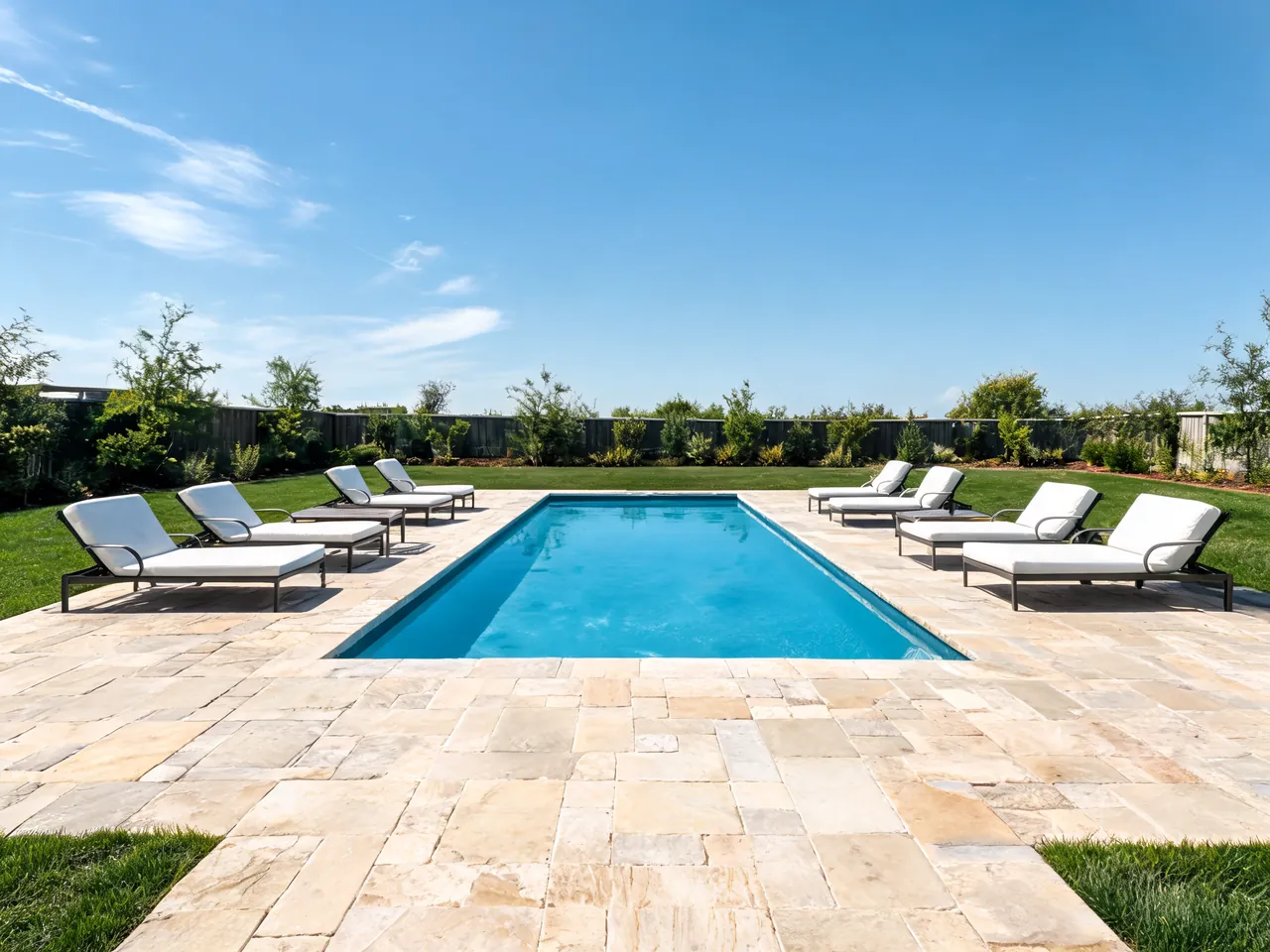
Travertine pavers
Natural travertine, light beige tones
Hot climates — travertine stays notably cooler underfoot than concrete or dark stone, which is why it dominates sunbelt pool decks.
See it on your photo →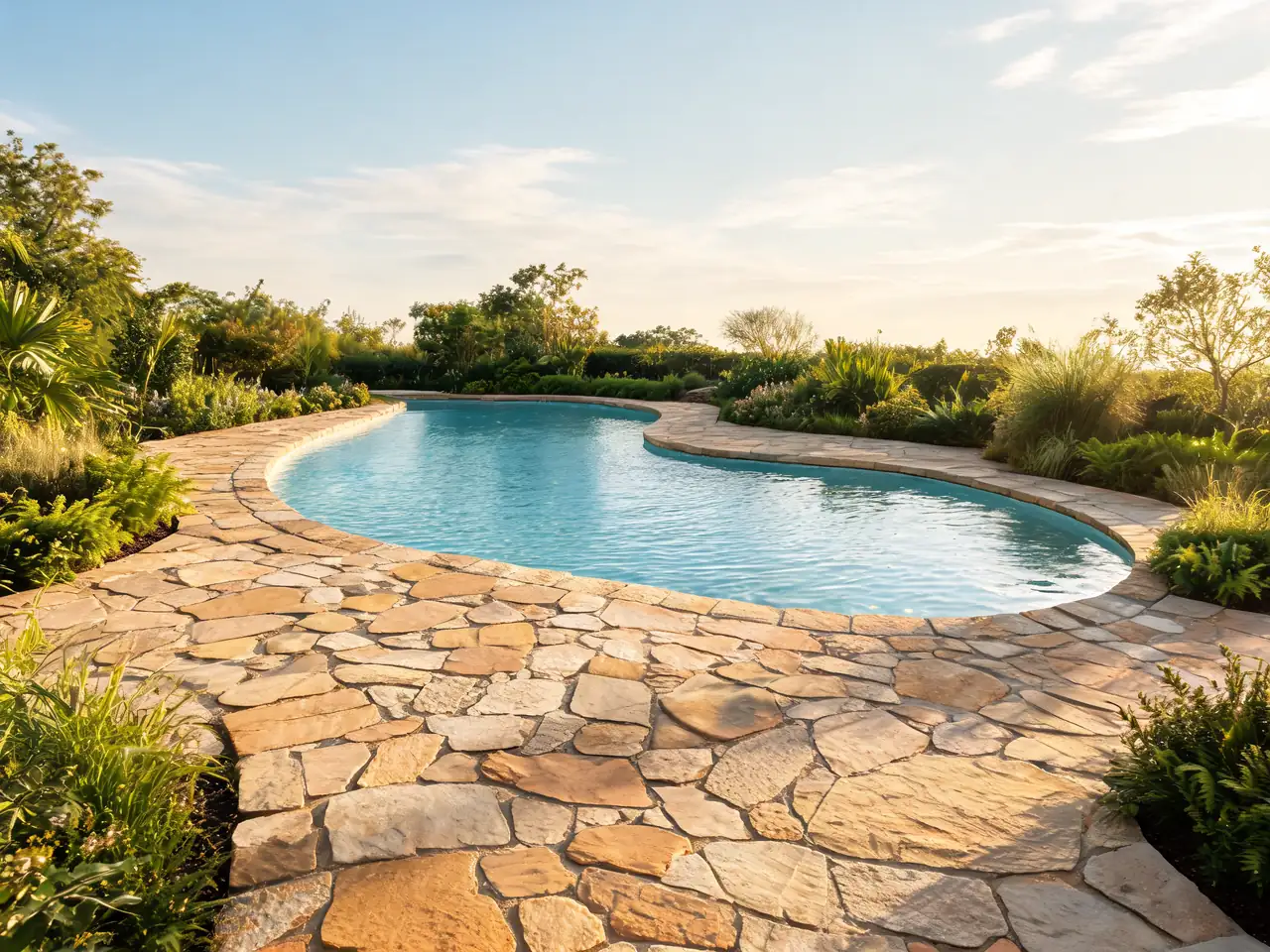
Natural flagstone
Irregular sandstone slabs, planted joints
Freeform and lagoon-style pools where a rigid grid would fight the curves.
See it on your photo →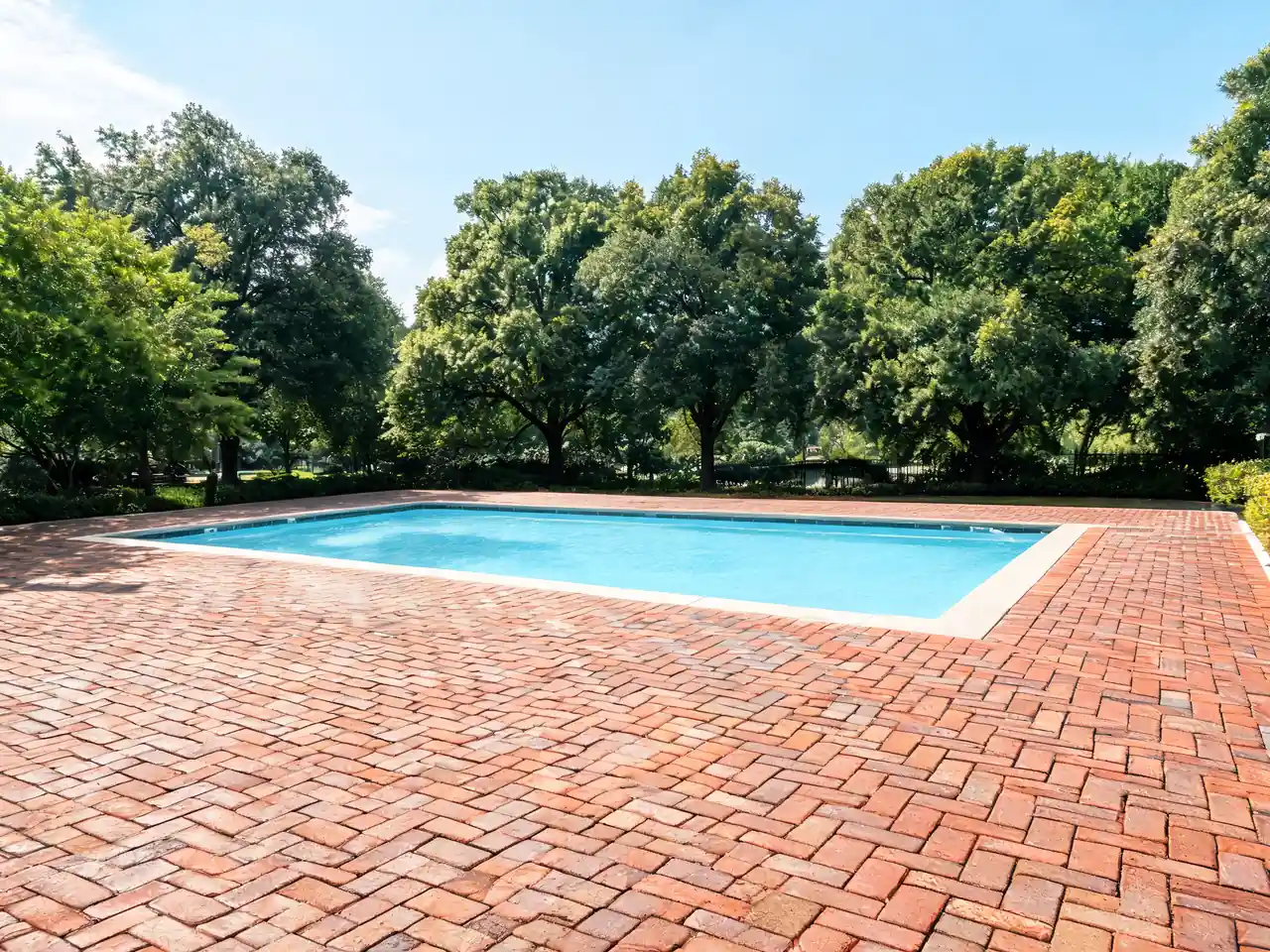
Brick pavers
Clay brick, herringbone pattern
Traditional homes and established gardens; brick ages into a pool landscape rather than out of it.
See it on your photo →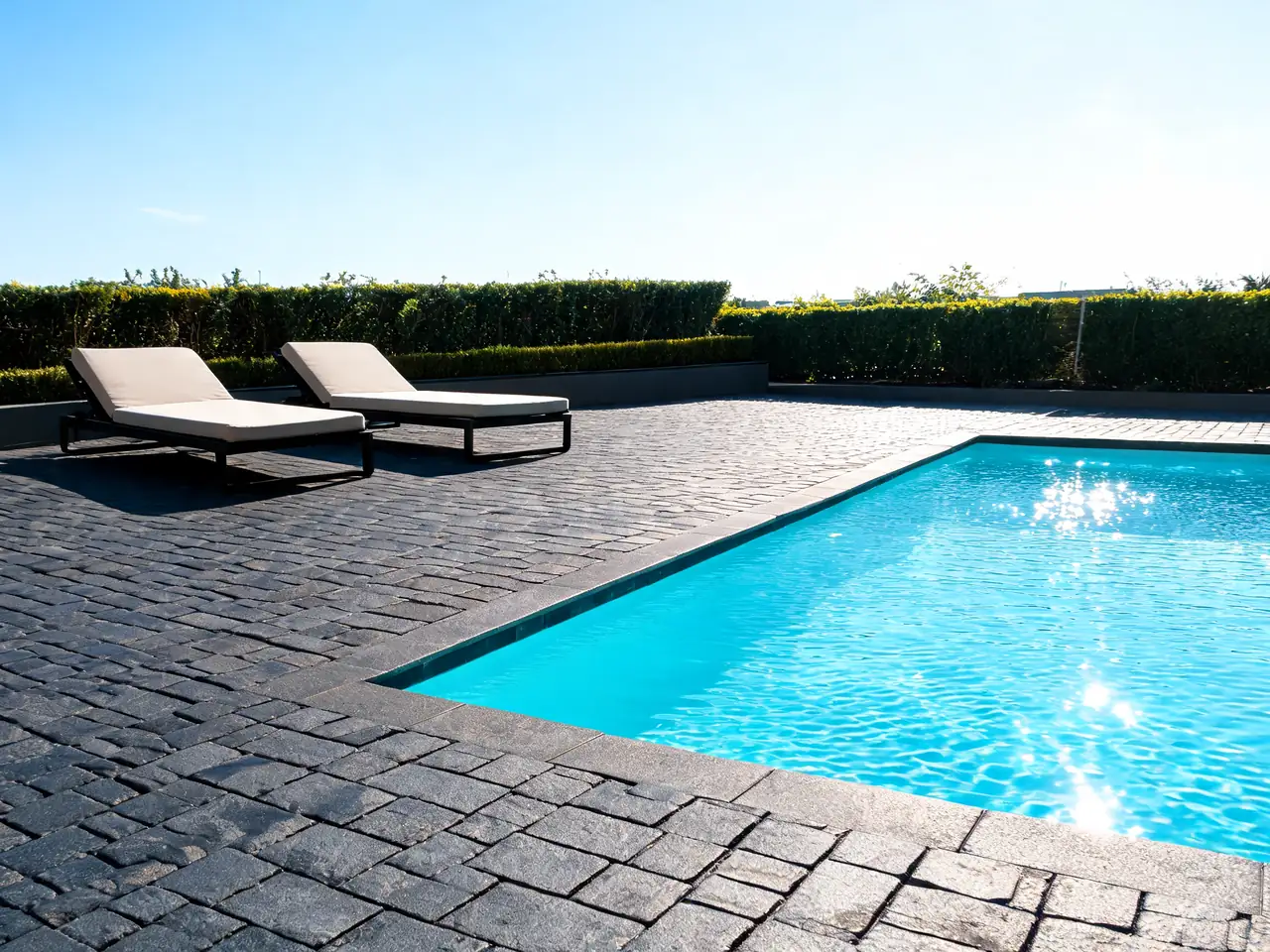
Dark contrast pavers
Charcoal concrete pavers
Contemporary designs that want the water to glow — dark decks make turquoise water read a shade brighter, but run hot in full sun.
See it on your photo →Concrete & tile
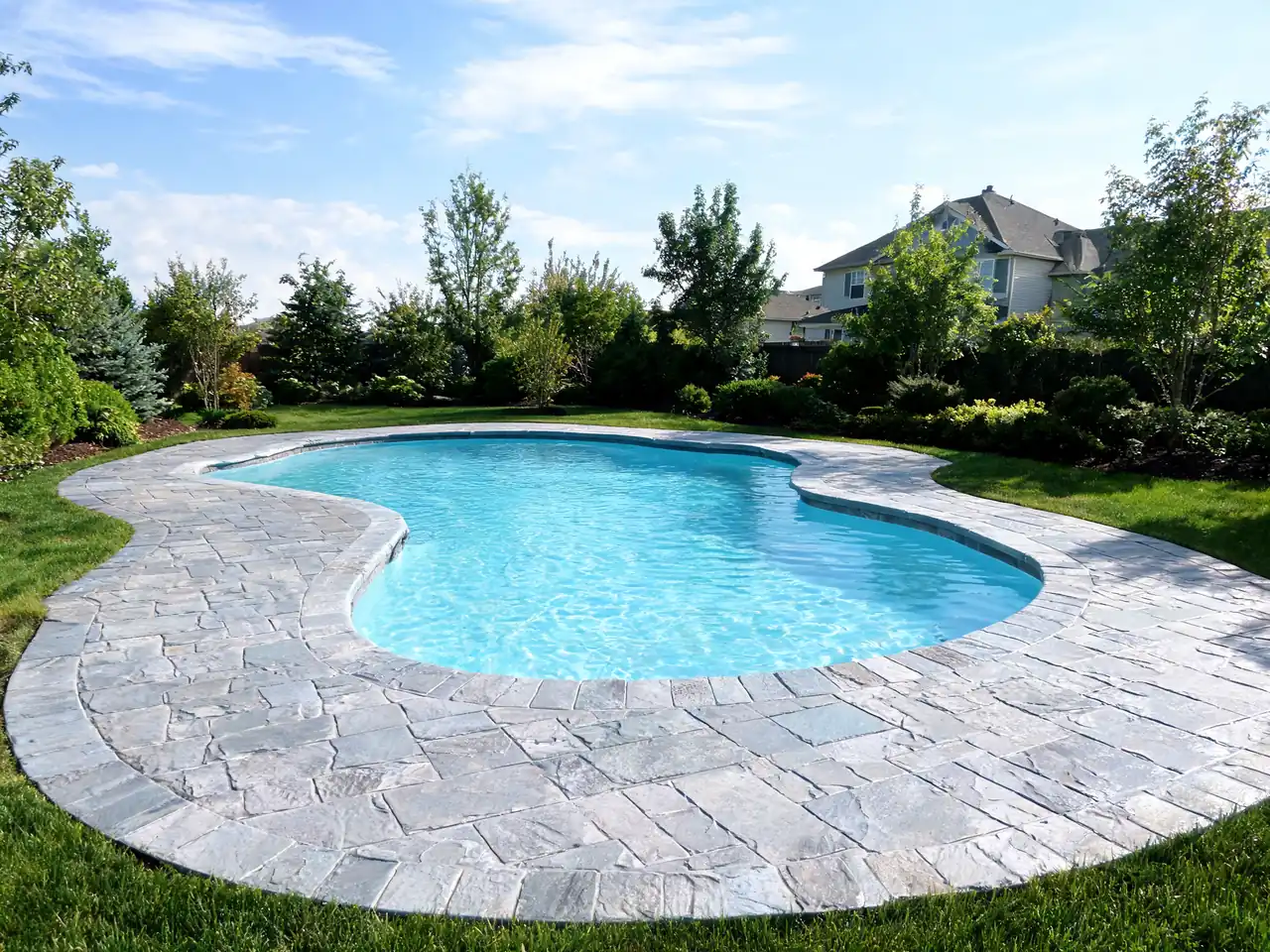
Stamped concrete
Concrete stamped in a slate ashlar pattern
Curved and freeform decks — poured concrete takes any shape, and stamping gives stone texture at a concrete price point.
See it on your photo →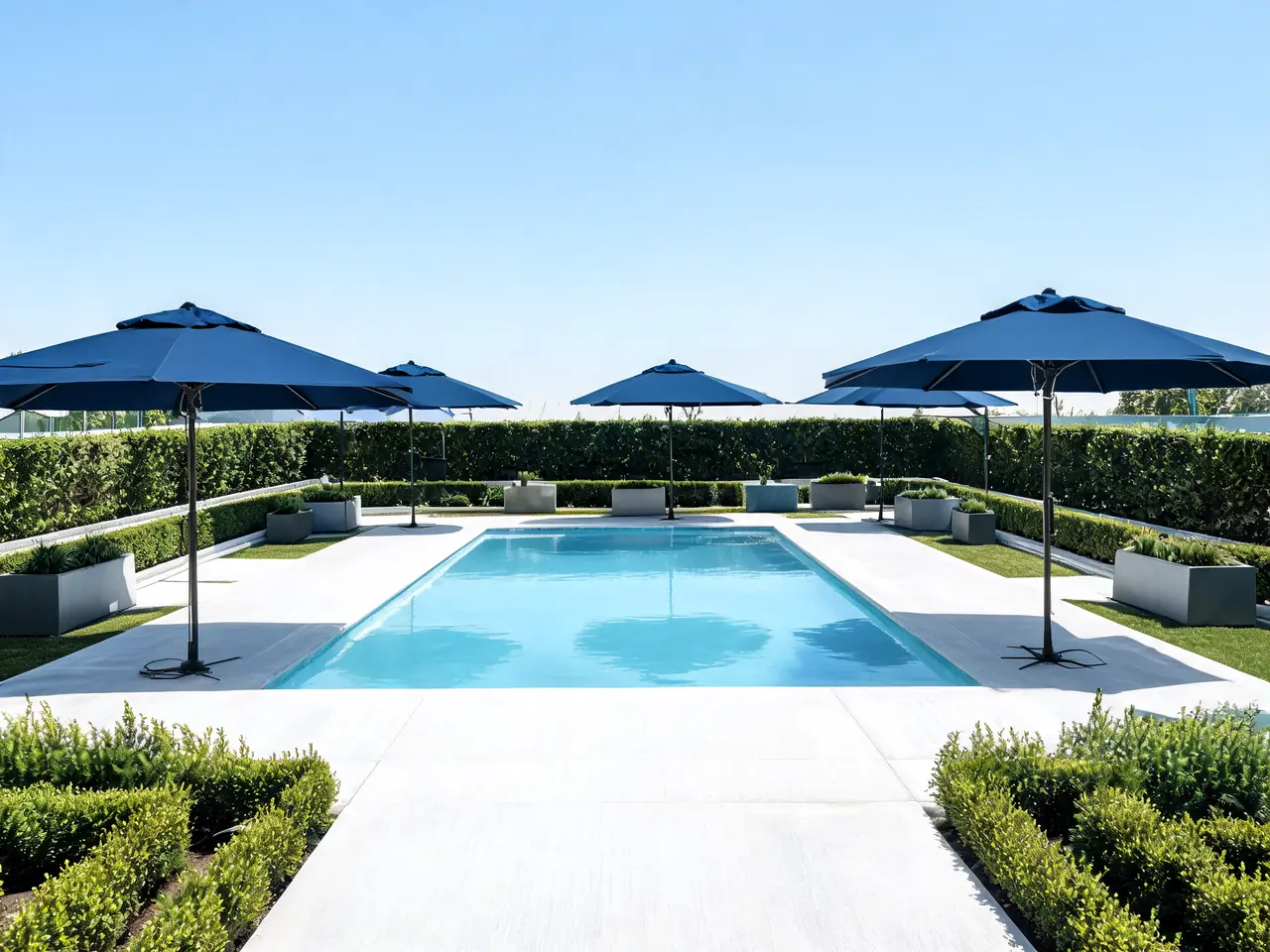
Brushed concrete with cool coating
Broom-finished concrete, cool-touch topcoat
Families prioritizing grip and bare feet; the broom finish is the classic slip-resistant surface, and coatings cut surface heat.
See it on your photo →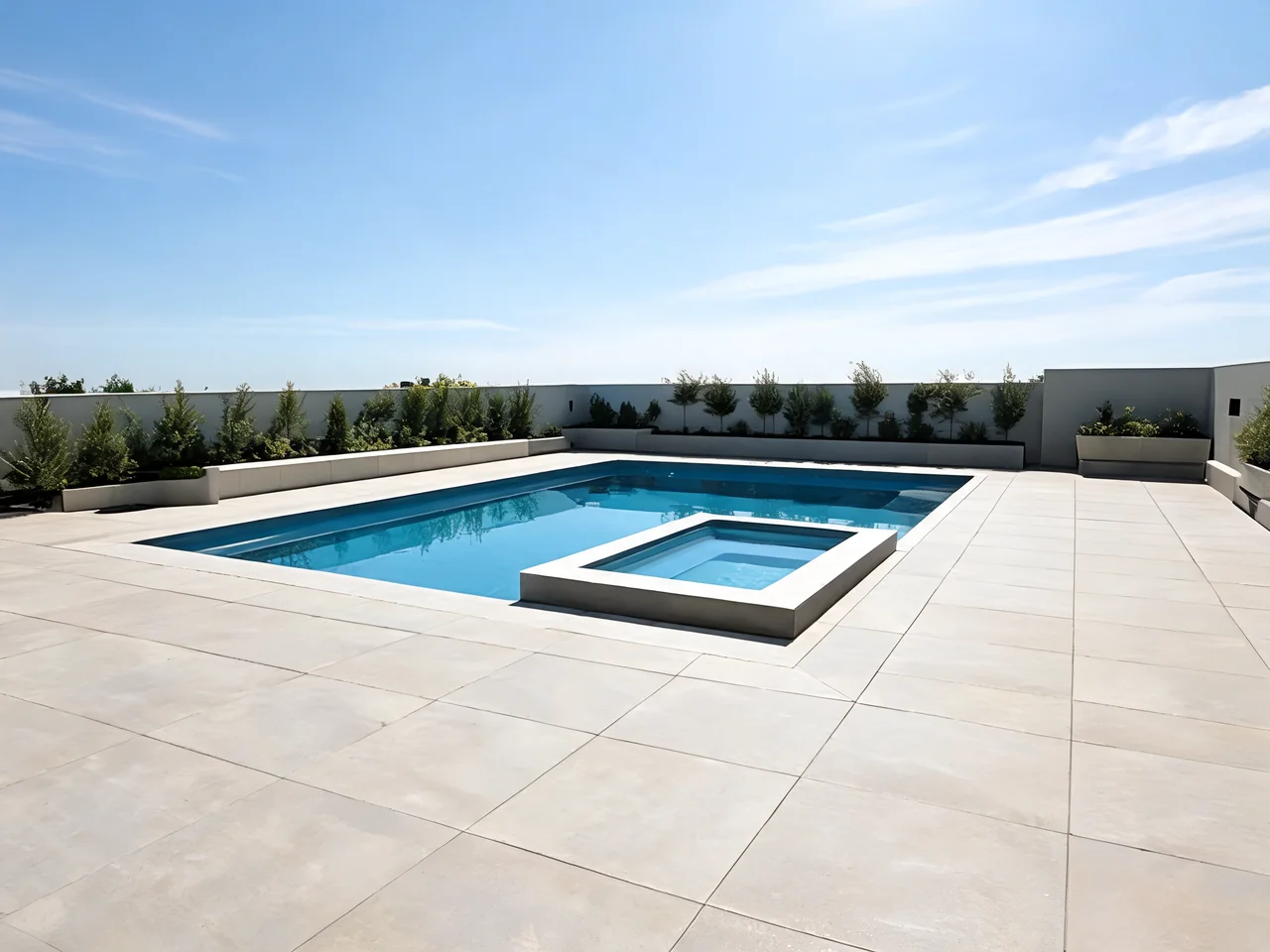
Porcelain tile
Large-format exterior porcelain, pale greige
Minimalist modern pools — the tightest joints and most uniform surface of any option, with textured anti-slip finishes made for wet areas.
See it on your photo →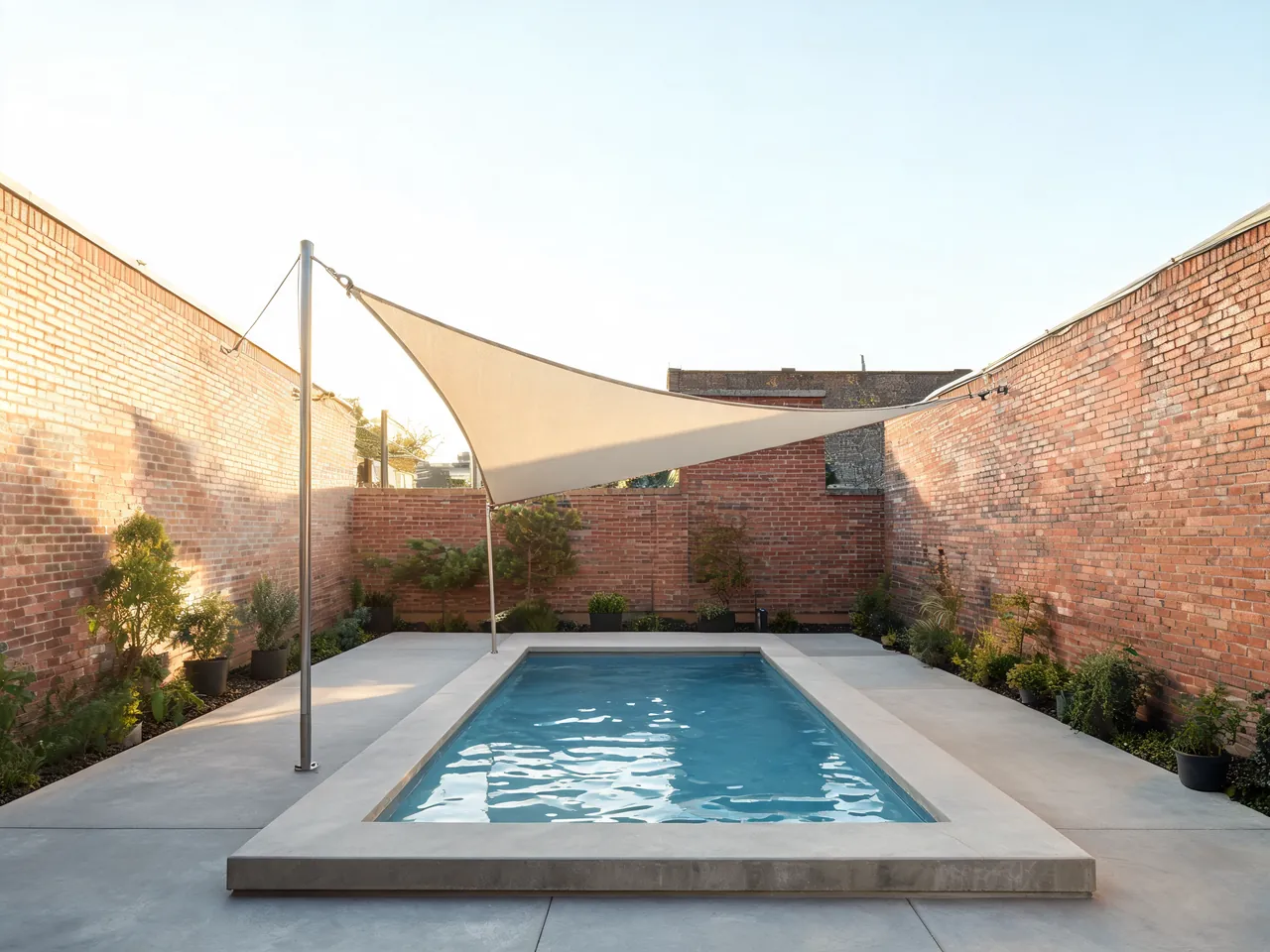
Cast concrete plunge court
Smooth cast concrete, shade sail
Small urban yards with a plunge pool, where the deck and the courtyard are the same surface.
See it on your photo →Wood & composite
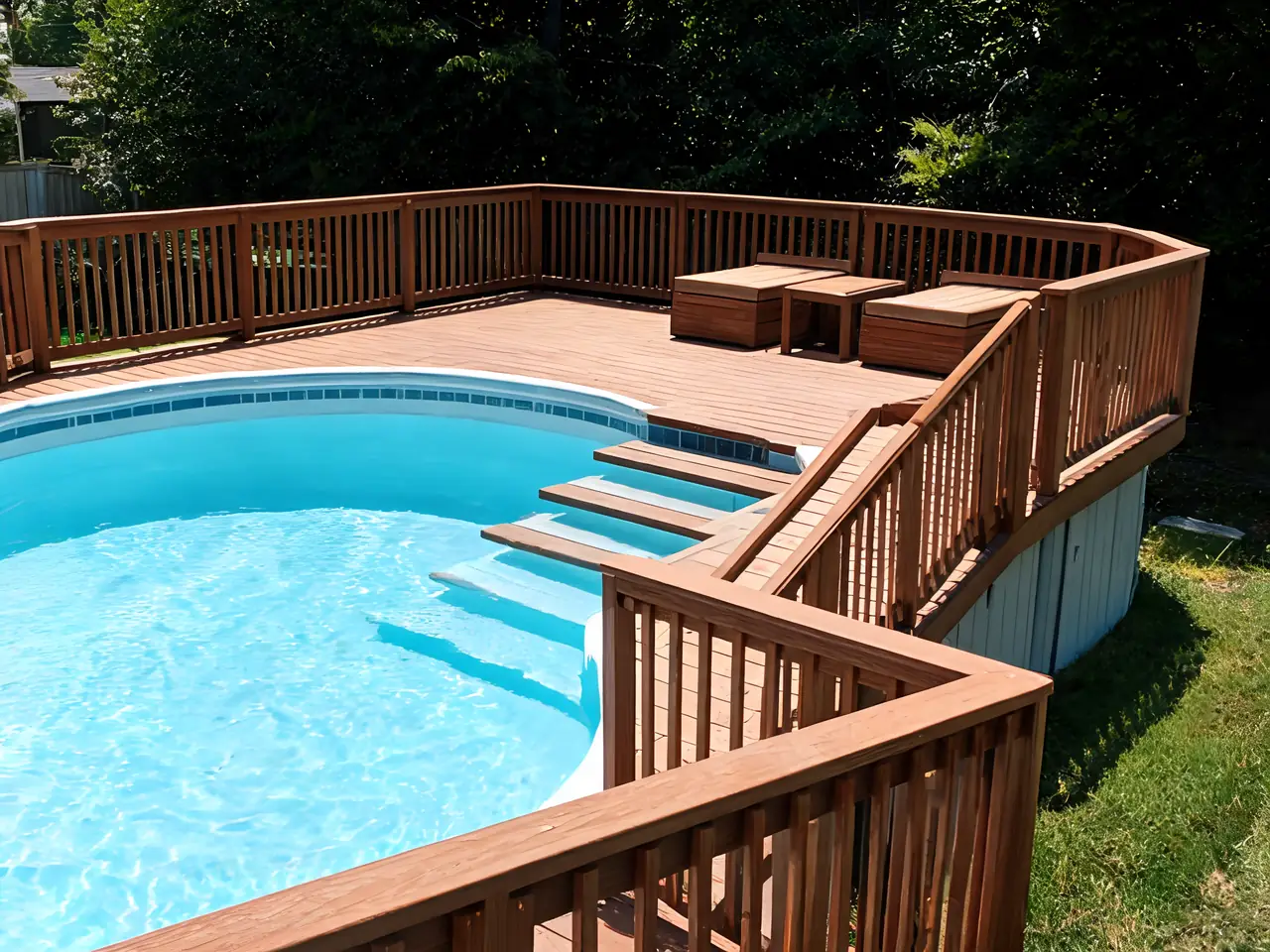
Composite deck
Composite boards, warm brown
Above-ground pools especially — a raised composite deck turns them into built-in pools visually, with no splinters and no annual sealing.
See it on your photo →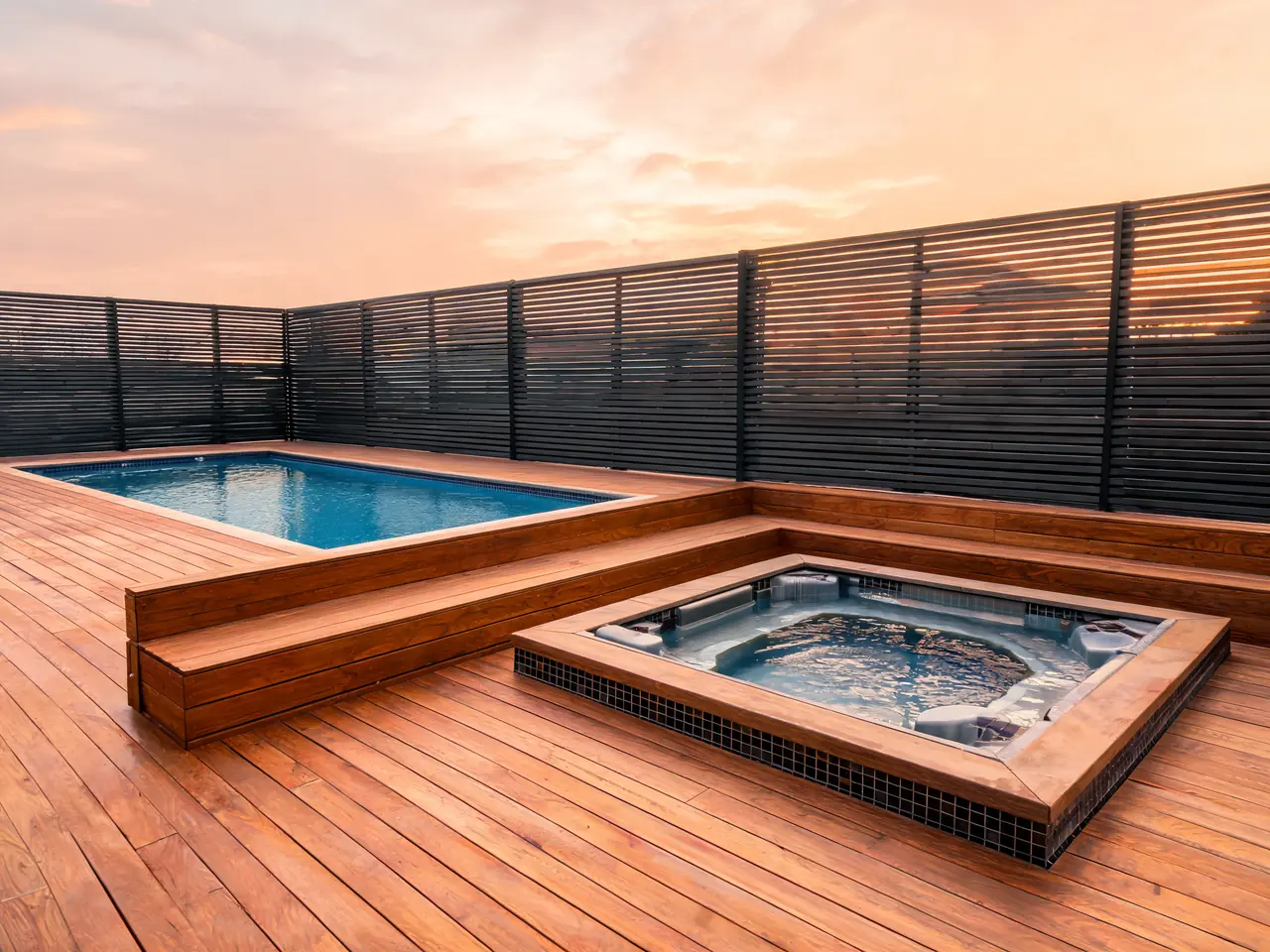
Hardwood with built-ins
Hardwood boards, built-in bench, sunken spa corner
Lap pools and modern gardens; built-in seating earns more use from a narrow deck than freestanding furniture.
See it on your photo →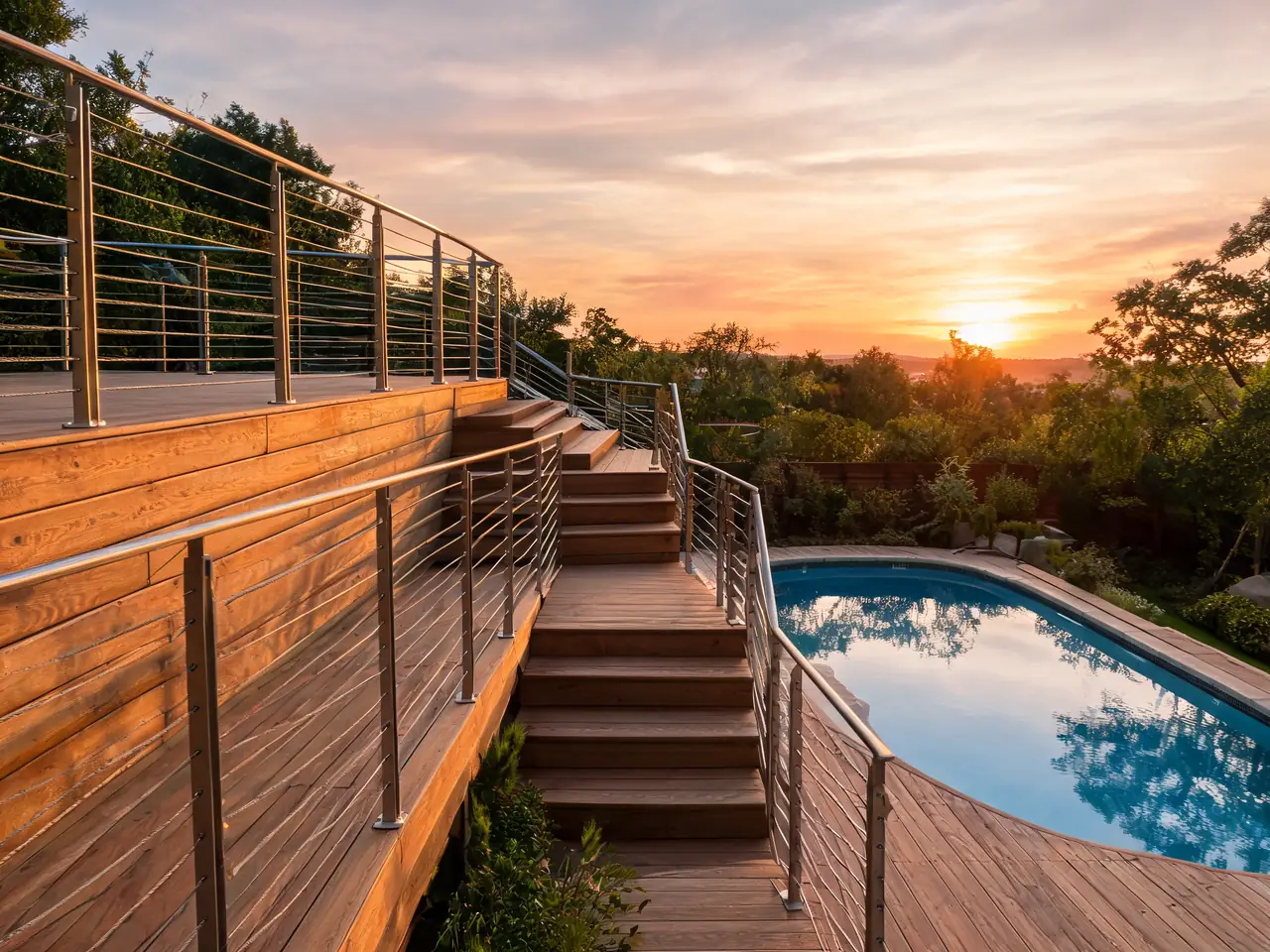
Multi-level deck
Wood decking, cable rails between levels
Sloped yards — stepping the deck down the grade is cheaper and better-looking than fighting the slope with retaining walls.
See it on your photo →Budget-minded
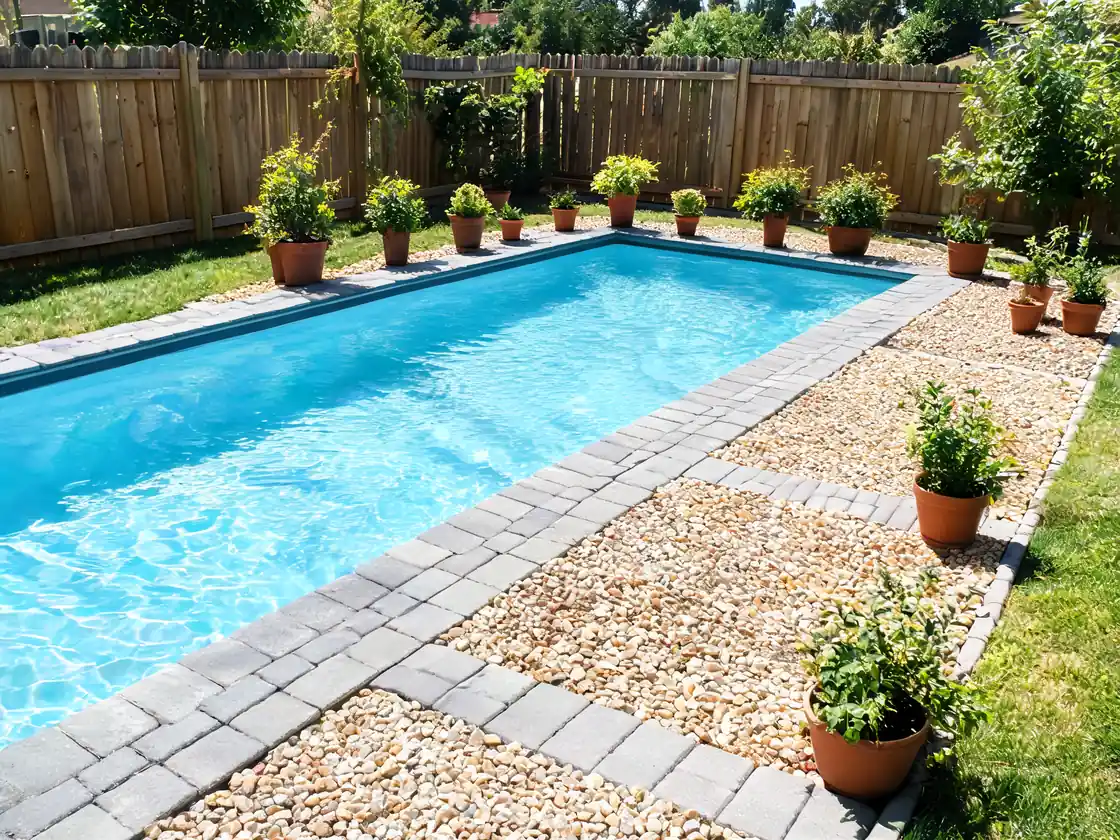
Pavers + gravel hybrid
Paver walkway, pea gravel seating areas
Small pools and phased projects — hard surface where feet are wet, gravel where furniture sits, upgradeable zone by zone later.
See it on your photo →Preview a pool deck material around your own pool
Upload a photo of your pool area, pick a material and tone, and the render follows your real pool shape and coping line — water, house and fencing unchanged, result in about 30 seconds.
Free to try · no credit card · uses the Pool Deck Materials mode
Frequently asked questions
What is the best material for a pool deck?
There is no single best — the trade-offs are heat, grip and upkeep. Travertine stays coolest underfoot; brushed concrete offers the most reliable grip; composite is the least maintenance near water; stamped concrete handles curves at a lower cost than natural stone. Preview your top two around your actual pool before pricing either.
Which pool deck material stays coolest underfoot?
Light-colored travertine is the standard answer — its surface temperature in full sun is noticeably lower than concrete or dark pavers. Light porcelain and cool-coated concrete are close behind. Dark surfaces of any material run hottest, whatever the marketing says.
Is a wood deck a good idea around a pool?
Real wood near constant splash needs committed maintenance — annual cleaning and periodic sealing — or it grays and splinters. Composite gets the wood look without that cycle, which is why it has largely taken over pool-adjacent decking, especially raised decks around above-ground pools.
What matters most for pool deck safety?
Slip resistance when wet — textured finishes (brushed concrete, tumbled pavers, anti-slip porcelain) over polished ones — plus drainage that sheds splash away from the pool, and fencing to local code. Aesthetics come after those three.
Can I resurface an existing concrete pool deck?
Often yes — sound concrete can take an overlay, a cool-touch coating, or serve as the base for thin pavers or exterior porcelain, avoiding demolition. A contractor has to assess cracks and drainage first. Previewing the finished material on a photo of your pool is a useful first step before that conversation.
How do I see a new deck surface around my own pool?
Upload a photo of your pool area to the deck & porch visualizer, choose the Pool Deck Materials mode, pick a material and tone, and the render resurfaces the deck while following your real pool shape and coping line. Free to try, no credit card.
Keep exploring