
Porch Railing Ideas
Twelve porch railing styles, from classic white spindles to cable and glass — each with notes on materials and the kind of house it suits. Railings sit at eye level from the street, so they change how a porch reads more than almost anything else. When a style catches your eye, the visualizer below swaps it onto a photo of your own porch.
12 ideas below, organized by style — every image AI-generated with the studio's own model.
Classic wood
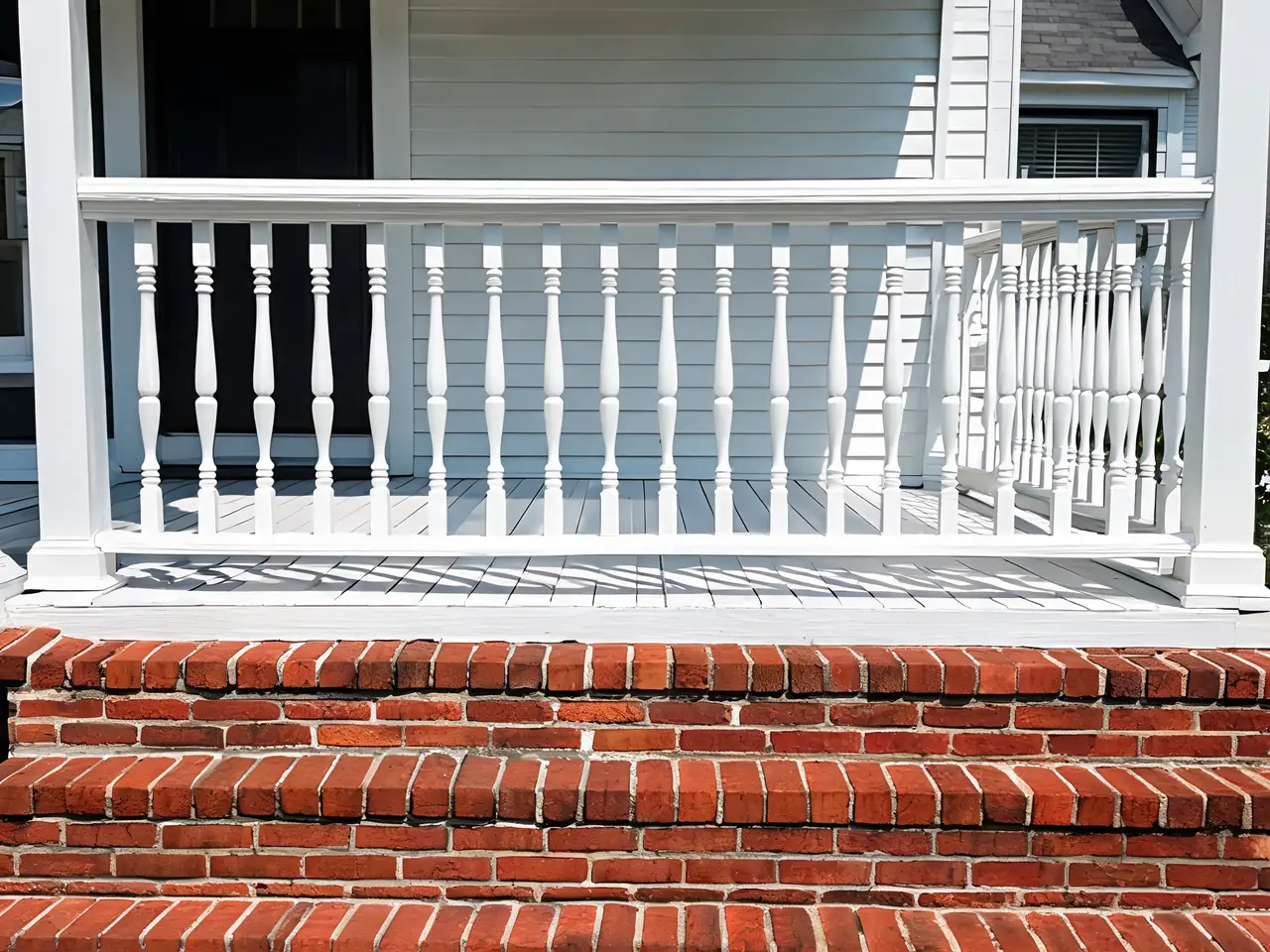
Classic white spindles
Painted wood, turned balusters
Traditional and colonial homes — the default American porch railing, and still the safest choice on a period facade.
See it on your photo →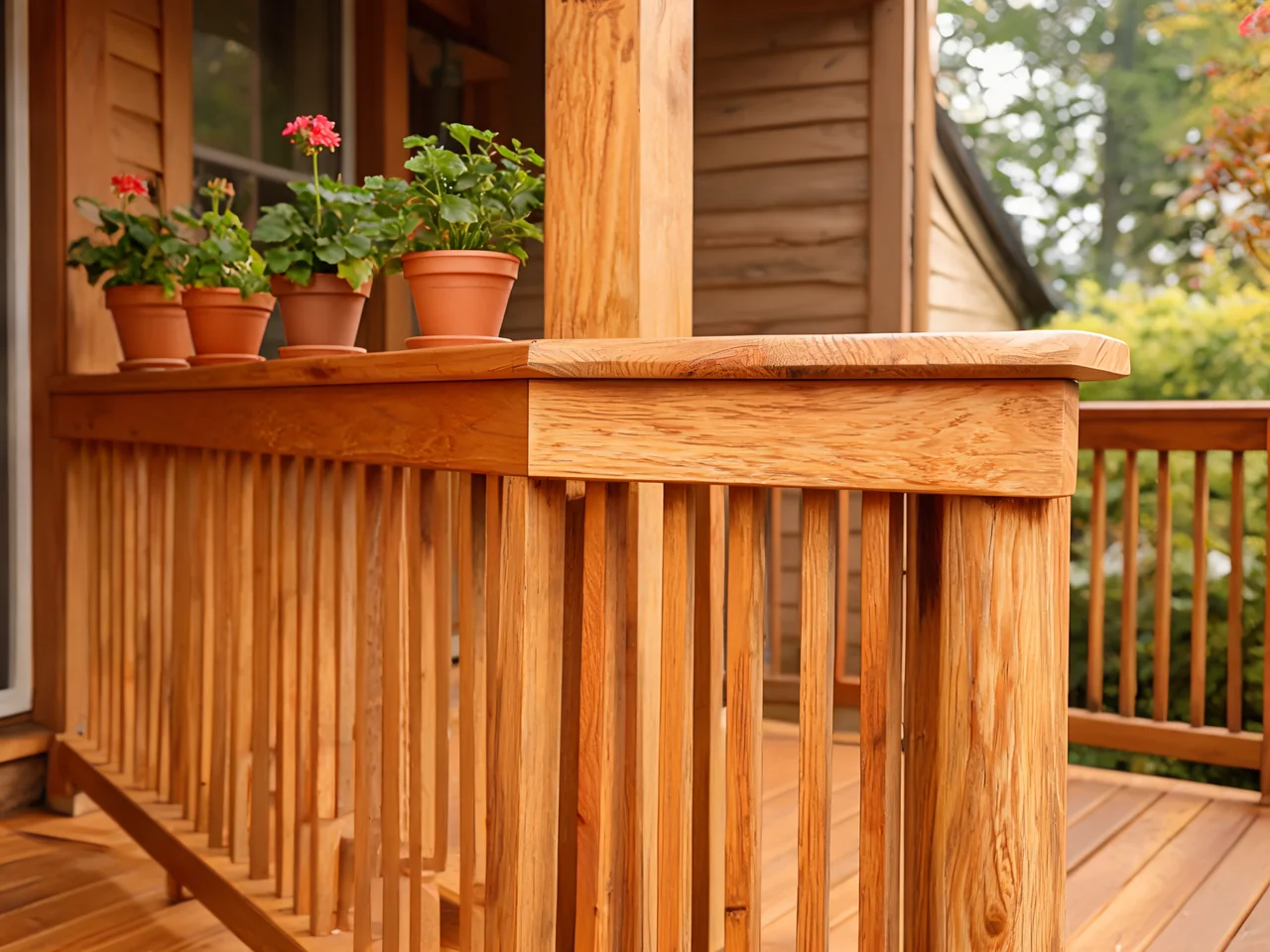
Natural wood with drink rail
Stained cedar, wide flat cap rail
Relaxed porches where people actually lean and set glasses down; the wide cap is the most-used square foot of the porch.
See it on your photo →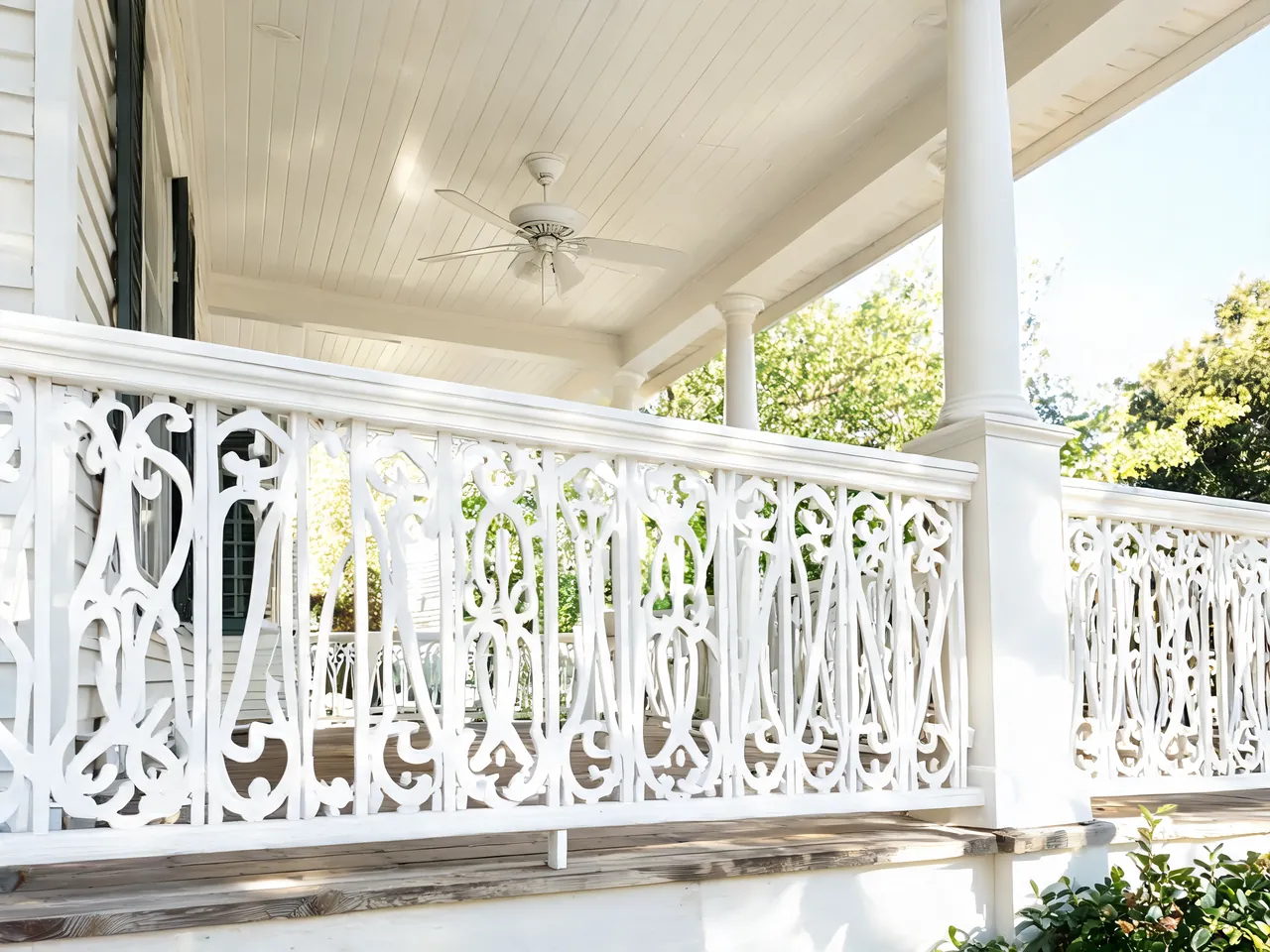
Chippendale
Painted wood in a lattice cross pattern
Southern and formal traditional porches — decorative without being fussy, and immediately recognizable.
See it on your photo →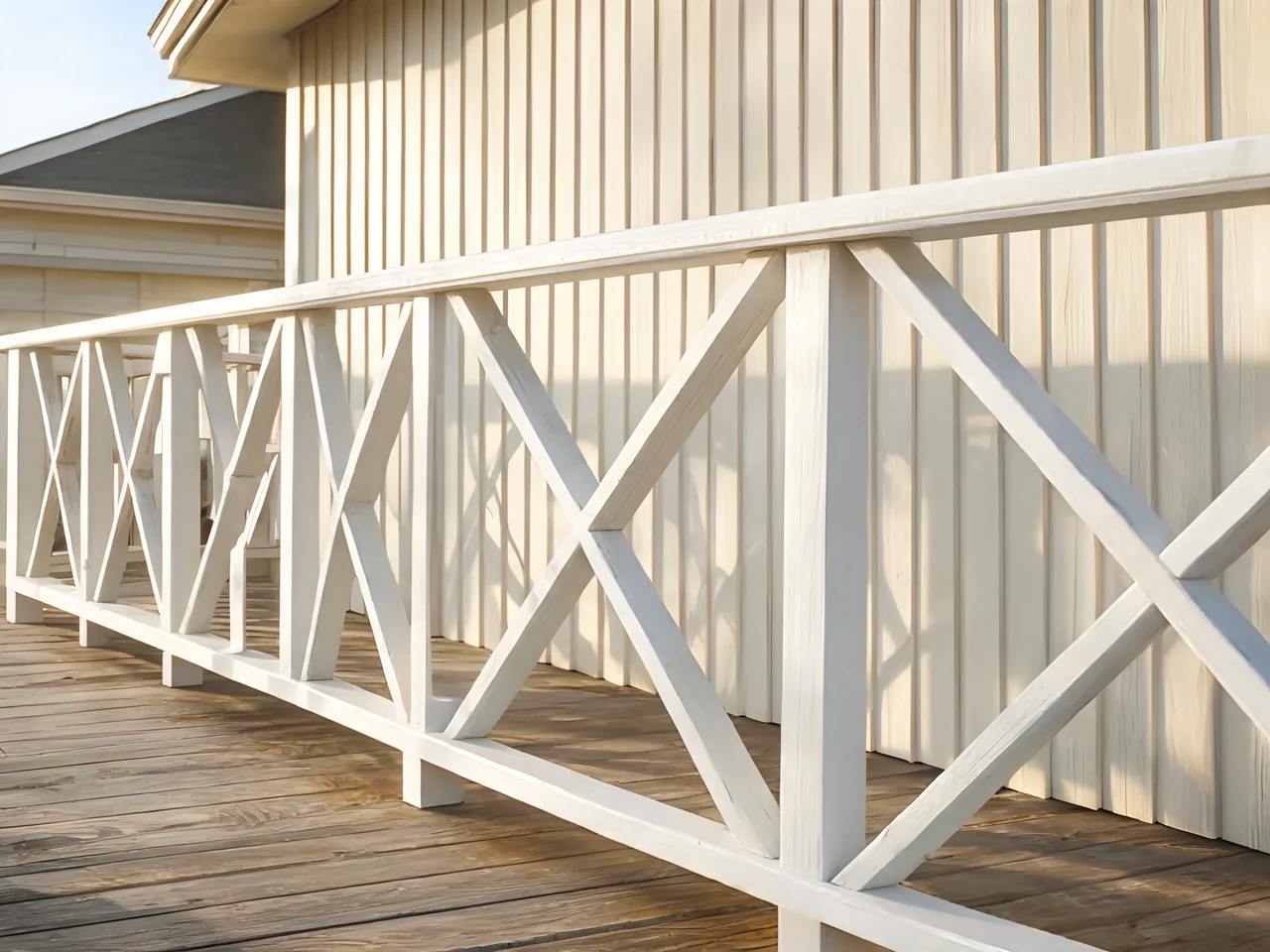
Farmhouse X-pattern
Painted wood in large X panels
Modern farmhouse builds and board-and-batten exteriors; bolder than spindles, still unmistakably rural.
See it on your photo →Metal & modern
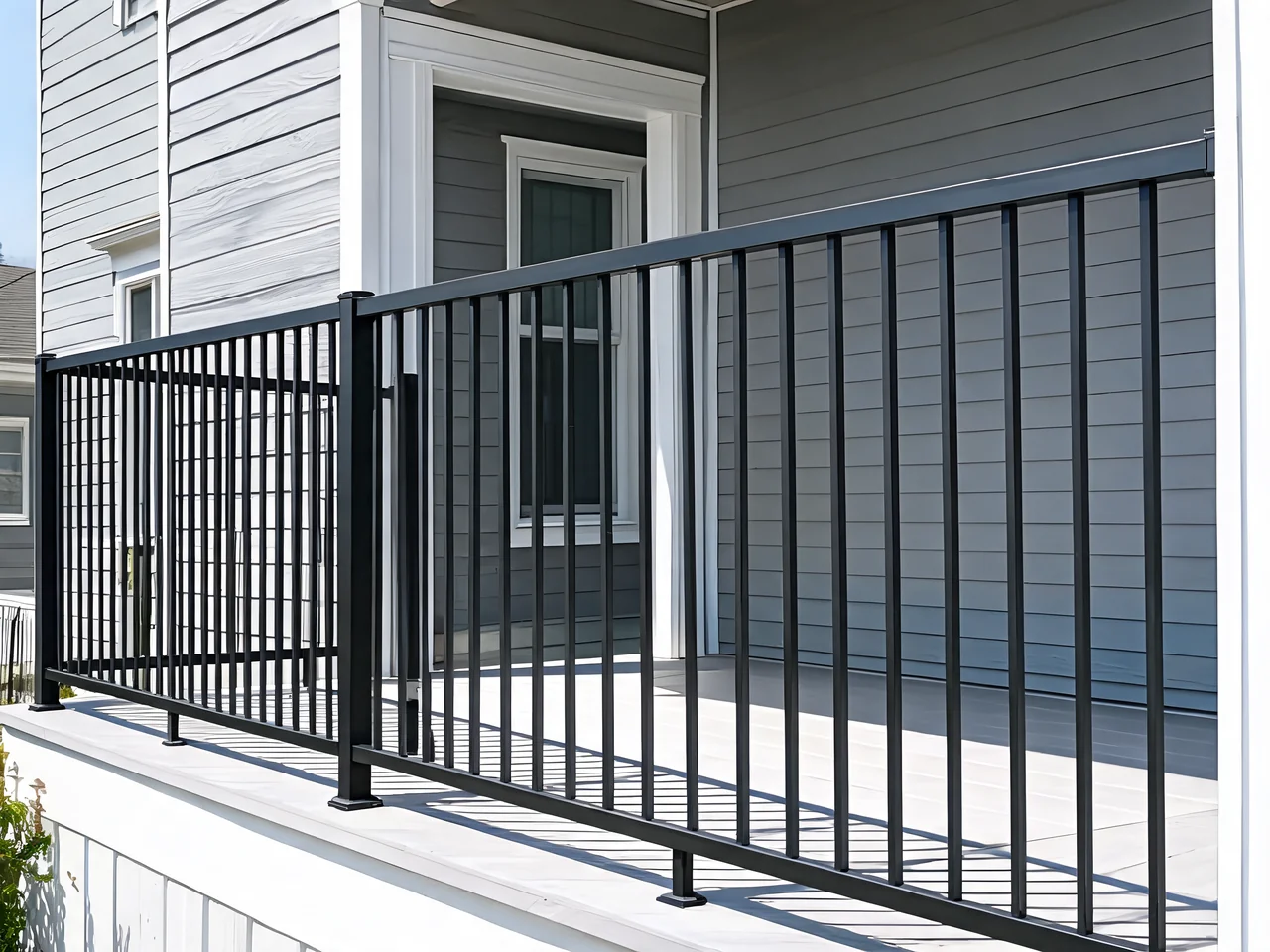
Black metal balusters
Powder-coated aluminum or steel, slim verticals
Renovations that want a current look without a full rebuild — the highest-contrast, lowest-visual-weight swap from white spindles.
See it on your photo →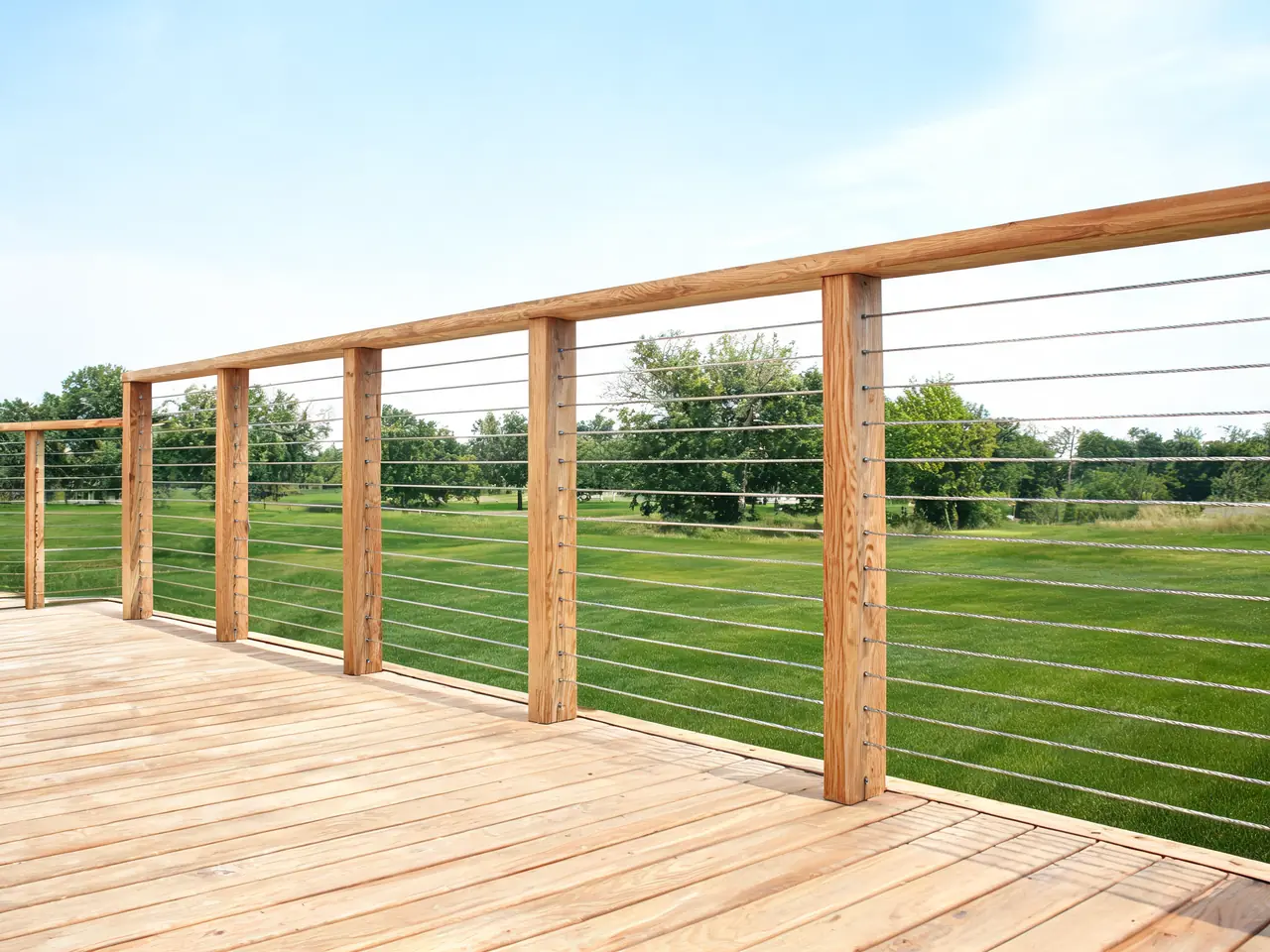
Horizontal cable
Stainless steel cables, wood or metal posts
Decks and porches with a view worth keeping — cables all but disappear at a few steps' distance.
See it on your photo →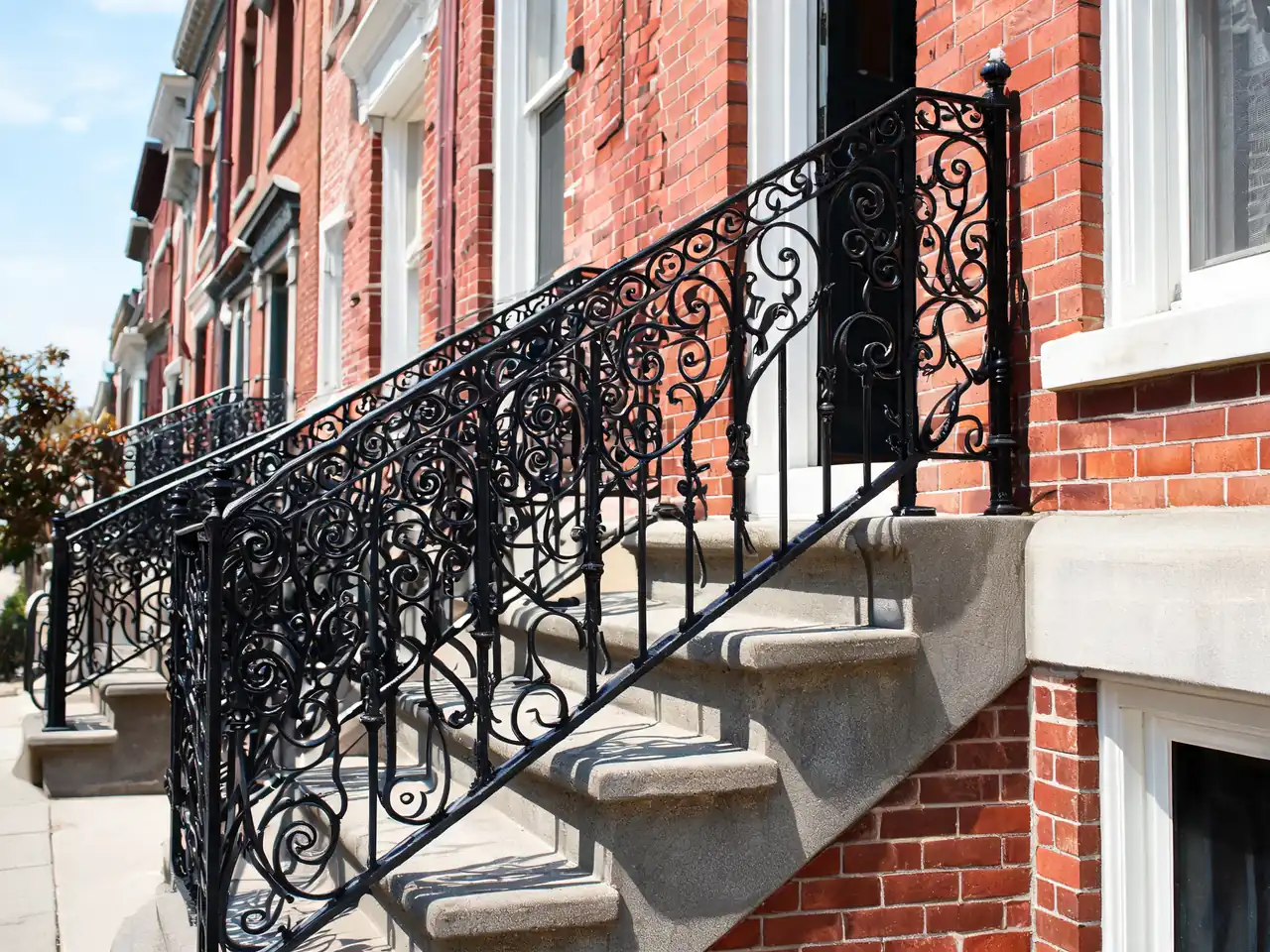
Wrought iron
Black iron with scroll details
Brick row houses and formal entries; ornamental iron carries historic streetscapes better than anything modern.
See it on your photo →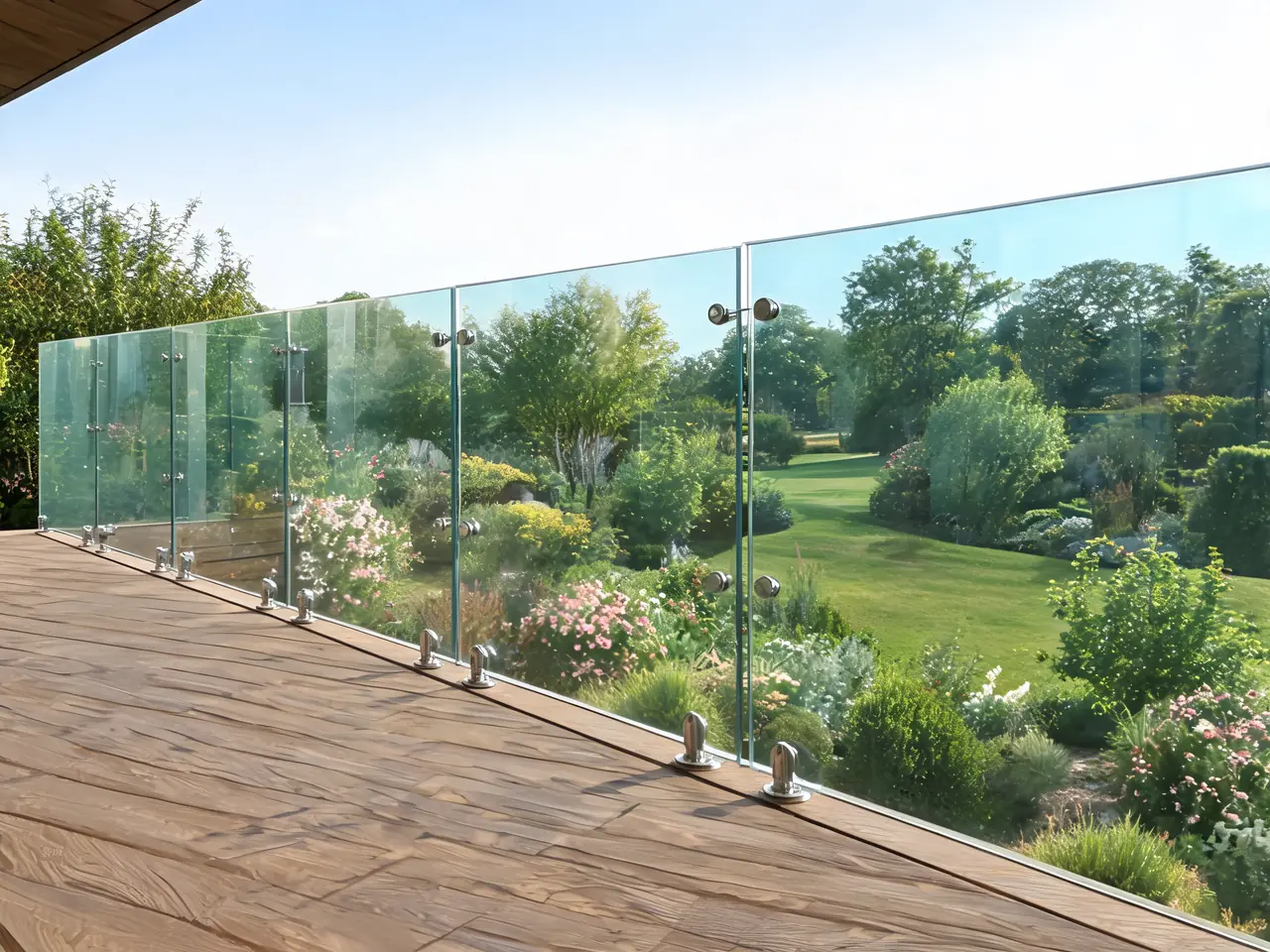
Glass panels
Frameless tempered glass, stainless standoffs
Upper-story porches and view lots — maximum light and view, with more cleaning than any other option.
See it on your photo →Mixed & low-maintenance
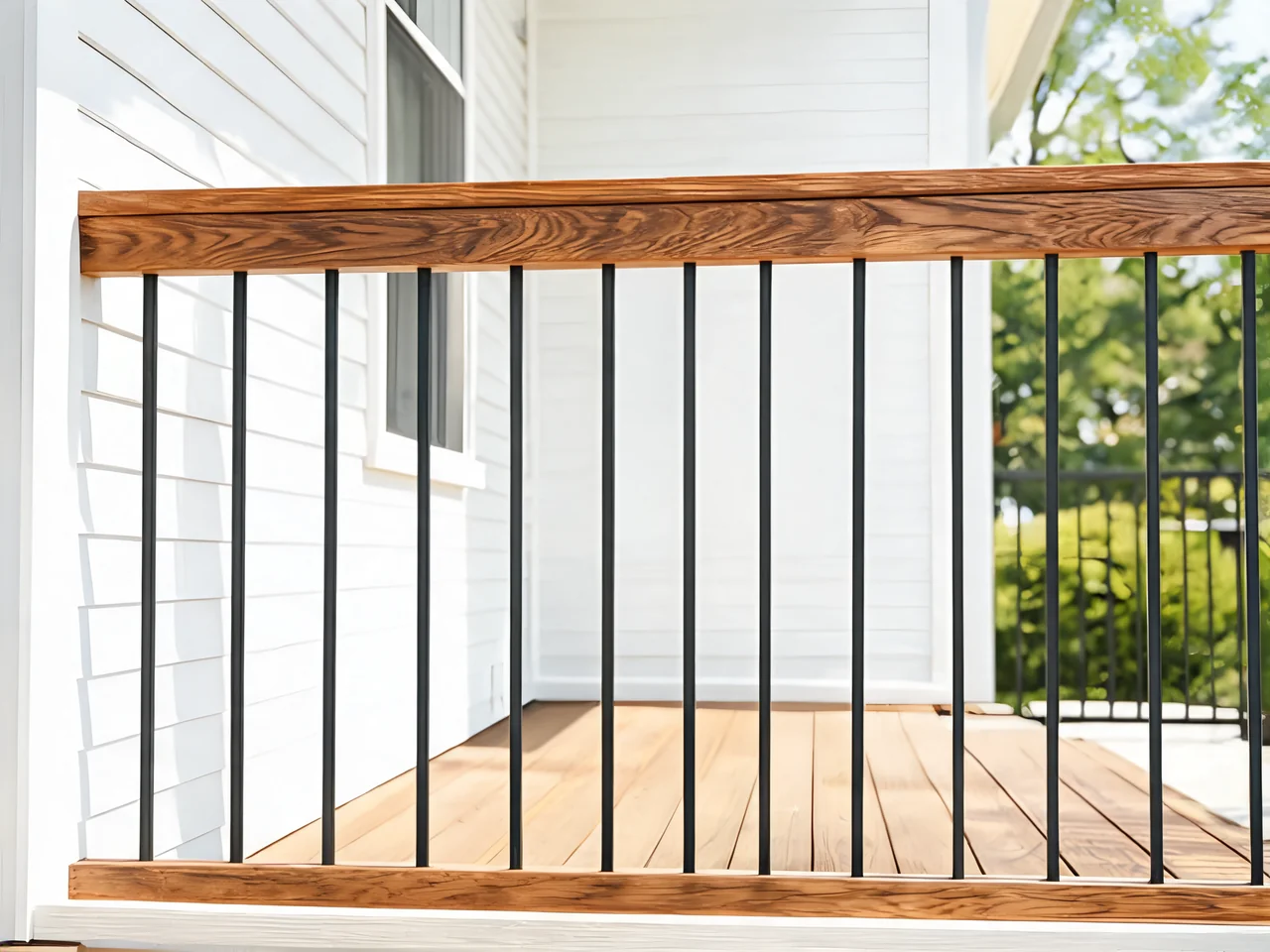
Wood + metal mix
Warm wood top rail over black metal balusters
Modern farmhouse and transitional homes — the wood cap softens the metal, and the combination flatters most sidings.
See it on your photo →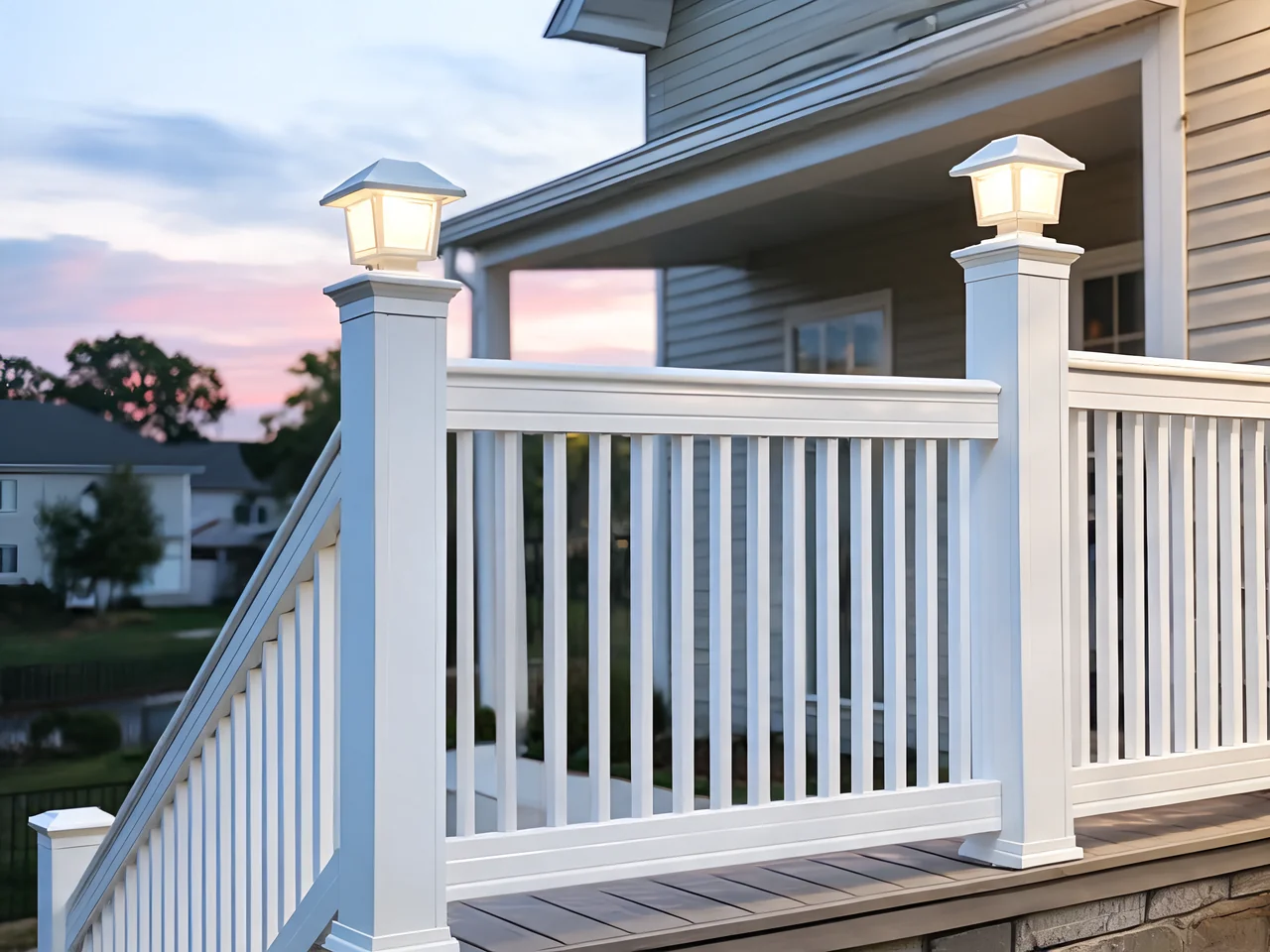
White composite
PVC/composite rails and post sleeves, solar caps
Owners done with repainting; composite keeps the classic white look with washing instead of maintenance.
See it on your photo →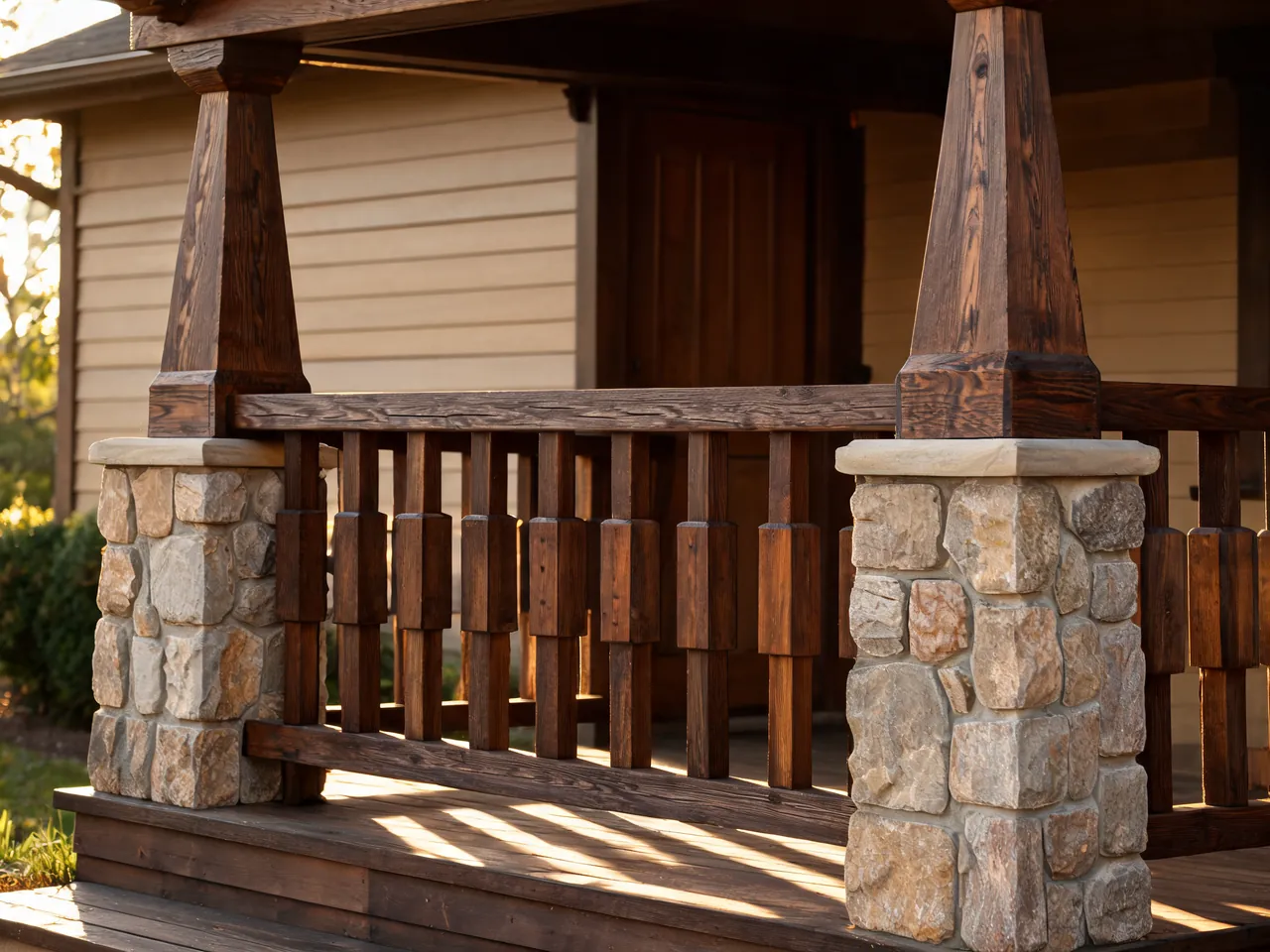
Craftsman
Thick square balusters, tapered columns on stone piers
Bungalows — the railing and columns are one composition, so matching the original proportions matters more than material.
See it on your photo →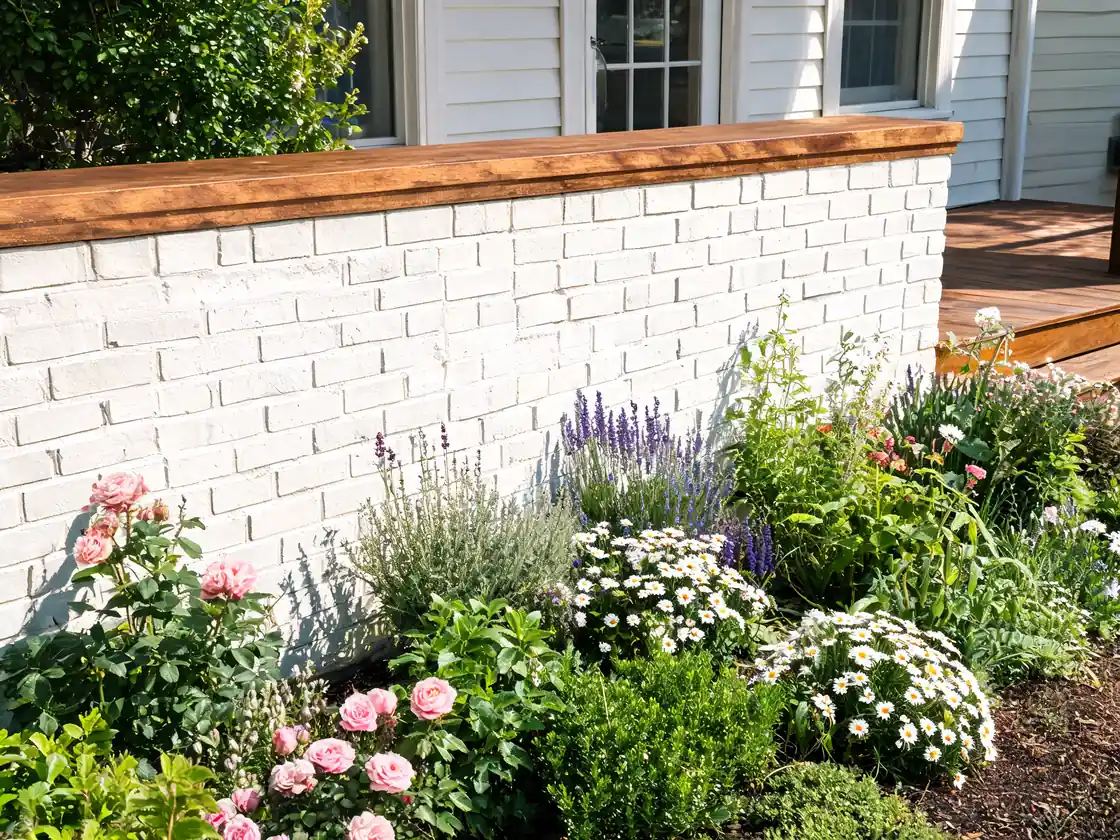
Knee wall
Painted brick or masonry wall, stained wood cap
Cottages and masonry homes; a solid half-wall gives wind shelter and privacy no baluster railing can.
See it on your photo →Swap the railing on your own porch photo
Upload a porch or deck photo, pick a railing style, and the render follows your real post positions and stair runs — house and boards unchanged, result in about 30 seconds.
Free to try · no credit card · uses the Porch & Deck Railing mode
Frequently asked questions
What porch railing height is required by code?
In most of the US, guardrails are required once the porch or deck floor is 30 inches above grade, with a typical minimum height of 36 inches for residential porches (42 in some jurisdictions) and baluster spacing that stops a 4-inch sphere. Codes vary by location — confirm with your local building department before ordering materials.
What is the most popular porch railing style right now?
Black metal balusters are the most common upgrade from white wood spindles — they suit most sidings, need little maintenance and read as current without being trendy. Cable railing leads where there is a view. Whether either suits your porch is a ten-second check in the visualizer with your own photo.
Which railing needs the least maintenance?
Powder-coated aluminum and composite need the least — occasional washing. Stained wood needs re-coating every few years; painted wood needs the most attention. Glass is maintenance-light structurally but shows every fingerprint and water spot.
Can I mix railing materials?
Yes, and one combination has become a style of its own: a warm wood top rail over black metal balusters. The wood gives your hands and glasses somewhere pleasant to rest; the metal keeps the view open. It pairs especially well with modern farmhouse exteriors.
How do I choose a railing color for my porch?
Test it against the trim and the body color, not in isolation. Matching the trim (usually white) makes the railing recede; contrasting (black on white siding) makes the porch line sharper. The railing mode in the visualizer renders any color on your own photo, which settles it faster than theory.
How can I preview a railing style on my own porch?
Upload a photo of your porch or deck to the deck & porch visualizer, choose the Porch & Deck Railing mode, pick a style and color, and the render replaces your existing railing while keeping the posts, stairs and house unchanged. Free to try, no credit card.
Keep exploring