
How to use Fashion Lookbook on AI Two
Create multi look fashion lookbook stills with Fashion Lookbook in Fashion Studio.
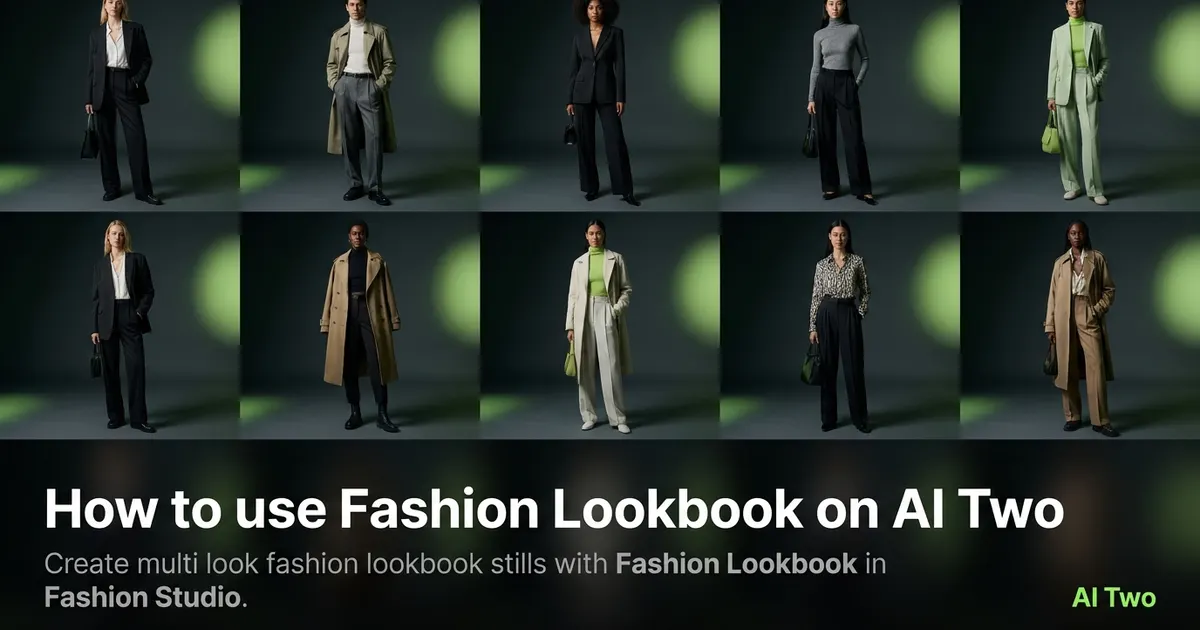
Fashion Lookbook on AI Two is the ecommerce page I open when an apparel seller needs several styled stills from approved product bases for a seasonal drop page or wholesale PDF. You upload sharp garment or on model photos, run Fashion Lookbook, and download frames tuned for multi look storytelling while product detail stays readable. When I tested three moods on the same linen dress after ghost mannequin prep, the lookbook set kept hem and neckline stable enough for a grid on the brand site, which is the bar I use before I upload. I treat outputs as seller campaign assets, not consumer outfit inspiration for daily wear. Credits meter each generation. Free signup credits covered several look tests for me on one hero SKU before I batched the rest of the line on a paid plan. Most runs finish in about 30 seconds after Generate.
What Fashion Lookbook does
You upload approved apparel bases, run Fashion Lookbook, and download listing oriented stills with lookbook style framing and lighting across multiple looks.
When I tested lookbook versus flat lay on the same blouse, lookbook spent more frame on styled context while flat lay kept the product flat for marketplace thumbnails.
Fashion Studio lists this page in the ecommerce photography cluster beside ghost mannequin, flat lay, fabric photography, and category pages.
Built for sellers who need coordinated frames across a drop. It is not a personal styling page.
I open Fashion Lookbook after packshot or try on bases are approved so fabric detail and logos are already locked.
Free signup credits covered four look tests for me on one dress SKU. Paid plans raise monthly limits when you shoot a full seasonal line.
In my experience, lookbook frames fail when the source is soft. I fix the base photo before I spend mood credits.
I save lookbook downloads beside ghost mannequin outputs with the same SKU code for channel specific uploads.
For wholesale lines I note which buyer portal each lookbook still targets so reps do not send catalog only crops to a story driven buyer.
Multi look still uses credits per generation on AI Two. I budget looks before I batch the full SKU list.
How to run it step by step
Step one: sign in or create a free account. Step two: confirm the garment and model base already look correct on a sharp photo. Step three: open Fashion Lookbook and keep defaults on run one. Step four: generate and wait about 30 seconds. Step five: download or compare one setting change beside the original.
I name the channel and mood in one sentence before I generate. Lookbook means coordinated story frames, not a single marketplace thumbnail.
When I tested a row of knit tops, I reused one approved ghost mannequin base across six SKUs instead of re shooting each hanger.
Credits apply per generation. I approve two hero looks max during tests, then batch the SKU list once creative signs off.
If logos smear at zoom, I stop and return to the ecommerce hub or Ghost Mannequin before more lookbook runs.
I change one setting per run. Combined changes make it hard to repeat success on the next SKU.
Bundle listings need each piece visible in inputs before I ask for a set frame on sibling bundle tools.
I label downloads with SKU, look index, and date before I upload to marketplace backends.
When I build a three look page, I generate look one, approve zoom, then copy the same base for look two instead of swapping bases mid batch.
I keep form notes in the campaign folder so the photographer matches styling on the next physical sample day.
Which photo works best
Start from a sharp on model or strong garment photo with readable seams and prints. Lookbook tools amplify what you give them.
I keep a base approved folder that only holds files cleared for campaign moods. That stops me from running lookbook on a draft try on I already rejected.
Even lighting in the source helps lookbook frames stay consistent across a grid. Harsh window streaks on one SKU stand out beside neighbors.
Avoid heavy filters before upload. Lookbook adds its own polish. Double styling in the source fights the page.
If the garment is cropped at the hem, the model may invent fabric and the lookbook frame looks soft at zoom.
White balance should match across the line when you build a collection page. Mixed bulbs make navy and black SKUs look unrelated.
On model bases need clean edges around hair and shoulders. Messy cutouts distract from product detail in thumbnail view.
When prints are the selling point, I upload the highest resolution file the camera allows so stripe edges stay crisp.
For multi look pages, use the same base file dimensions across SKUs so the grid aligns in the layout tool.
Mistakes I avoid
Running lookbook before the garment base is approved on Ghost Mannequin or flat lay. Mood tools cannot fix a wrong size or soft logo.
Using editorial outdoor frames on catalog only buyer portals that reject atmosphere heavy crops.
Batching twelve SKUs before one lookbook test passes full zoom on logos and seams.
Mixing lookbook outputs from different white balances in one collection grid.
Treating lookbook stills as legal proof of fit. They are marketing frames for ecommerce listings.
Forcing lookbook reruns when Fabric Photography or flat lay is the brief the channel actually needs.
When to use another tool
Need flat marketplace thumbnails? Clothing Flat Lay or Ghost Mannequin. Need fabric macro story? Fabric Photography. Need exterior lifestyle light? Outdoor Shoots in the shoot types cluster. Need casting or model swap first? Open Fashion Ecommerce hub pages for models and virtual try on.
The ecommerce photography guide maps sibling pages. The Fashion Studio pillar covers the full seller toolkit when the lookbook drop is live.
Shoot type tools like Fashion Catalog and Fashion Editorial serve different channel rules. I pick lookbook when the brand site needs multiple styled frames per SKU.
After the download
I build a thumbnail grid mockup in my notes app before upload day so spacing issues show up early.
When a marketplace rejects an aspect ratio, I crop from the lookbook master without rerunning unless fabric detail was lost.
I attach SKU codes to filenames and share one folder link with the client instead of scattered chat attachments.
If one SKU in the line needs outdoor lifestyle for social, I run Outdoor Shoots from the same approved base after lookbook is live.
For reorder seasons I archive the lookbook master beside the source photo so the next drop reuses the same pipeline.
FAQs
Related studio guides
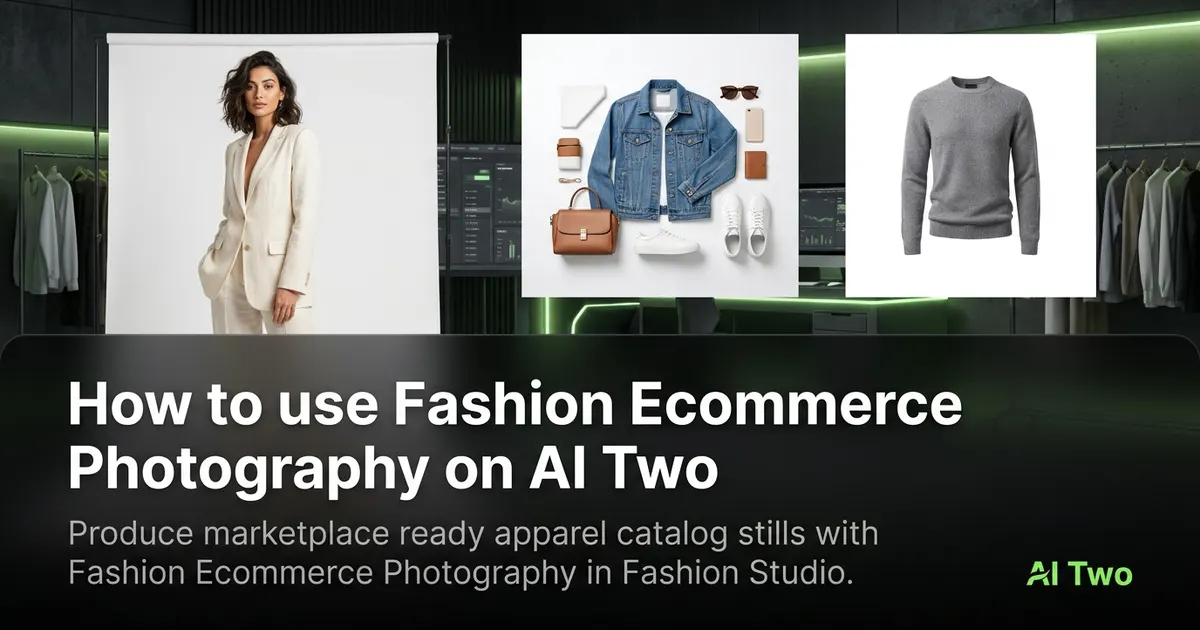
How to use Fashion Ecommerce Photography on AI Two
Produce marketplace ready apparel catalog stills with Fashion Ecommerce Photography in Fashion Studio.
Read guide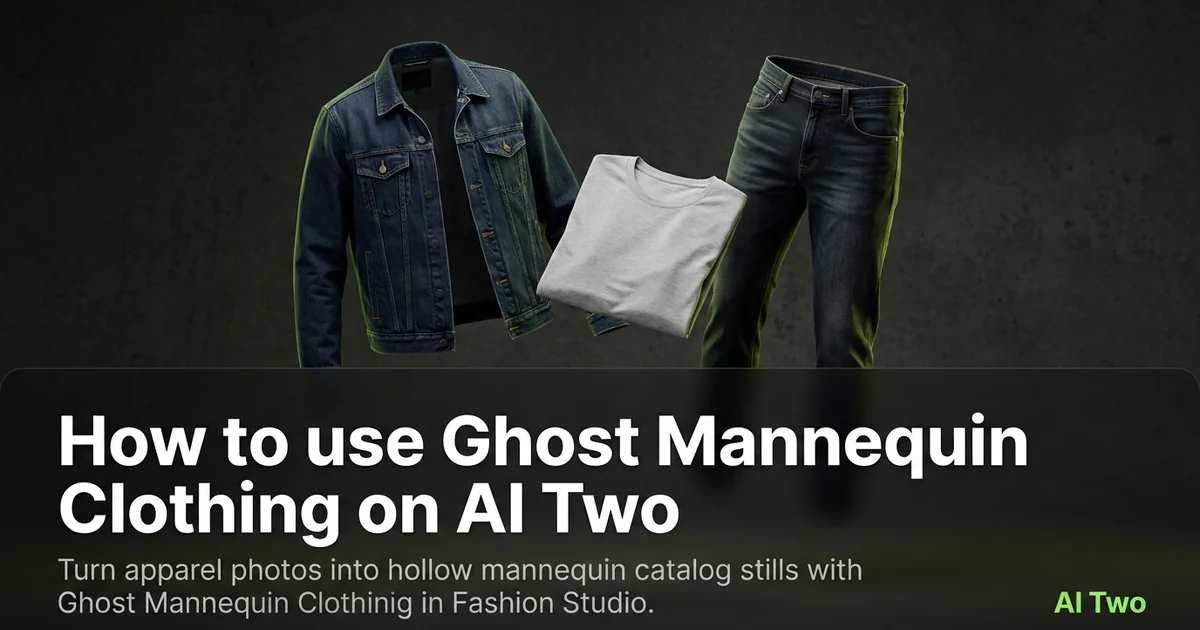
How to use Ghost Mannequin Clothing on AI Two
Turn apparel photos into hollow mannequin catalog stills with Ghost Mannequin Clothing in Fashion Studio.
Read guide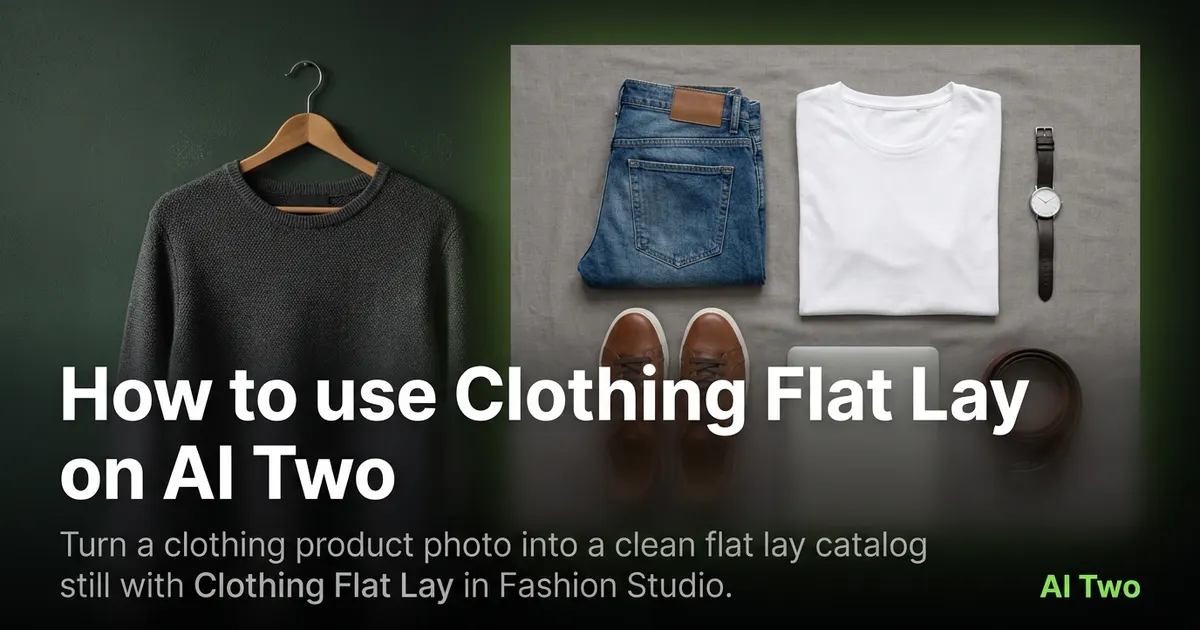
How to use Clothing Flat Lay on AI Two
Turn a clothing product photo into a clean flat lay catalog still with Clothing Flat Lay in Fashion Studio.
Read guide