
How to use Clothing Flat Lay on AI Two
Turn a clothing product photo into a clean flat lay catalog still with Clothing Flat Lay in Fashion Studio.
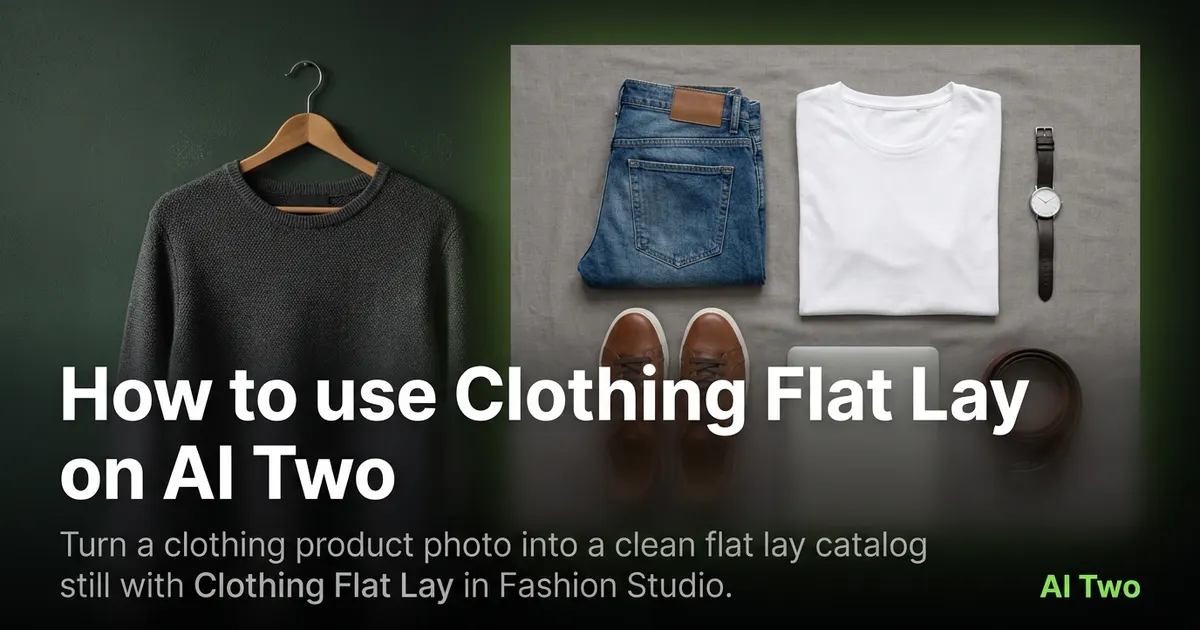
Clothing Flat Lay on AI Two is the Fashion Studio ecommerce page I open when a garment SKU needs a top down catalog frame for marketplace upload without booking a flat lay shoot. Apparel sellers use it to turn a hanger or table photo into a clean flat lay still with readable seams, labels, and fabric drape. When I tested a cotton tee from a hanger shot on neutral gray, the sleeve edges stayed sharp enough for a listing hero at zoom, which is the check I use before upload. I treat the download as a seller catalog asset, not a consumer outfit picker, and I rerun only after I compare stitch detail against the source photo at the same zoom level.
What Clothing Flat Lay does
Upload a clothing product photo or follow the form, choose presentation options, and generate a top down flat lay still with the garment laid out for catalog framing.
When I tested a denim jacket from a worn mannequin crop, the output kept pocket stitching readable at marketplace zoom without inventing a new brand label.
Fashion Studio lists this beside ghost mannequin, fabric photography, lookbook, hanger shots, and category pages in the ecommerce cluster.
Built for sellers who need flat lay packshots for SKU listings, not for consumer try on games.
I open this page after the garment is steamed and shot on neutral gray. Wrinkled samples copy every crease into the flat lay.
Free signup credits covered early SKUs for me. Paid plans raise monthly limits for seasonal apparel drops.
In my experience, even daylight on fabric beats mixed yellow bulbs that flatten navy and black tones on packshots.
I shoot a detail crop of the care label separately when the listing policy allows an inset image.
For patterned fabrics I place the piece on a gray sweep so the tool reads edge contrast without busy packaging.
I name exports by SKU and color so the marketplace upload folder does not mix variants from the same drop.
When a channel asks for a ghost mannequin later, I generate the flat lay hero first, then open ghost mannequin only if the channel rejects top down framing.
How to run it step by step
Step one: sign in or create a free account. Step two: upload a sharp garment photo on neutral background. Step three: pick presentation options, keep defaults on run one. Step four: generate and wait about 30 seconds. Step five: download or adjust one setting and compare.
Keep originals for each SKU. Collections reuse styles across seasons and colorways.
When I tested a linen dress, I checked hem stitching at full zoom before I approved the pack.
I run hero SKU first, then batch color variants once crop and background are locked.
Credits apply per generation, so I lock one framing on the lead piece before I batch five colors.
If fabric looks flat, I reshoot with softer daylight instead of stacking more runs on a harsh flash photo.
I export the flat lay still at full zoom checked resolution before I open background remover for white field copies.
When the garment has a visible logo, I include the full chest area in the source shot first so shoppers can compare print placement in the listing copy later.
My second run only changes background tone or sleeve layout after seam sharpness passes. Changing both at once hides which control helped.
I keep a printed measurement note beside the camera so size notes match the flat lay I approve for upload.
Which photo works best
Even daylight or softbox light shows fabric weave better than on camera flash alone.
Shoot the garment on gray or white so edges are clear. Busy retail racks hide sleeve lines on flat lay conversions.
Match the framing on the Fashion Studio before and after card for this tool.
Steam wrinkles before you shoot. Flat lay tools copy creases faithfully, which helps honesty and hurts rushed samples.
Avoid heavy beauty filters on product source photos. Buyers zoom, and soft seams get returns.
Include the full garment in frame. Cropped hems hide length shoppers compare on dresses and coats.
Keep camera height level so the top down drape looks believable on the catalog crop the form produces.
Remove plastic hang tags and price stickers before you shoot. They copy into the flat lay and look unprofessional on a listing hero.
Shoot at higher resolution when you plan heavy marketplace zoom crops. Soft phone exports fall apart on fine knit texture.
Mistakes I avoid
Uploading lifestyle party shots when the listing needs a clean product focused flat lay first.
Changing background, sleeve layout, and colorway together on run one.
Expecting editorial campaign motion from a catalog flat lay tool.
Batching five color variants from one blurry phone snap.
Skipping seam sharpness on hems and cuffs. That is where buyers look first on apparel returns.
Treating the flat lay still as a size chart. I still list measured dimensions in the product copy from the flat photo.
When to use another Fashion tool
Need a hollow mannequin shape on white? Ghost Mannequin. Need fabric drape on a styled cloth? Fabric Photography. Need a multi look set? Fashion Lookbook. Need a hanging frame? Hanger Shots. Need on model casting? Open menswear, womenswear, or plus size photography pages after the packshot is approved.
The ecommerce photography cluster guide maps sibling pages. The Fashion Studio pillar covers the wider toolkit.
Open the ecommerce hub when you are still choosing which packshot style matches the channel rules.
If the piece is jewelry rather than apparel, switch to the jewelry cluster instead of forcing this page.
After the download
I attach the original source photo beside the flat lay still in the SKU folder so merchandising can compare seam detail at the same zoom.
For marketplace packs I name files by colorway and date so weekend uploads do not mix variants.
When a channel asks for a white field copy, I feed the approved flat lay into background remover instead of restarting from a random crop.
If hem stitching softens, I return to the sharpest original and rerun with a smaller presentation nudge rather than stacking fixes on a soft file.
I screenshot the form labels that worked and paste them into the SKU notes so next season matches the approved flat lay without guessing.
FAQs
Related studio guides

How to use Fashion Ecommerce Photography on AI Two
Produce marketplace ready apparel catalog stills with Fashion Ecommerce Photography in Fashion Studio.
Read guide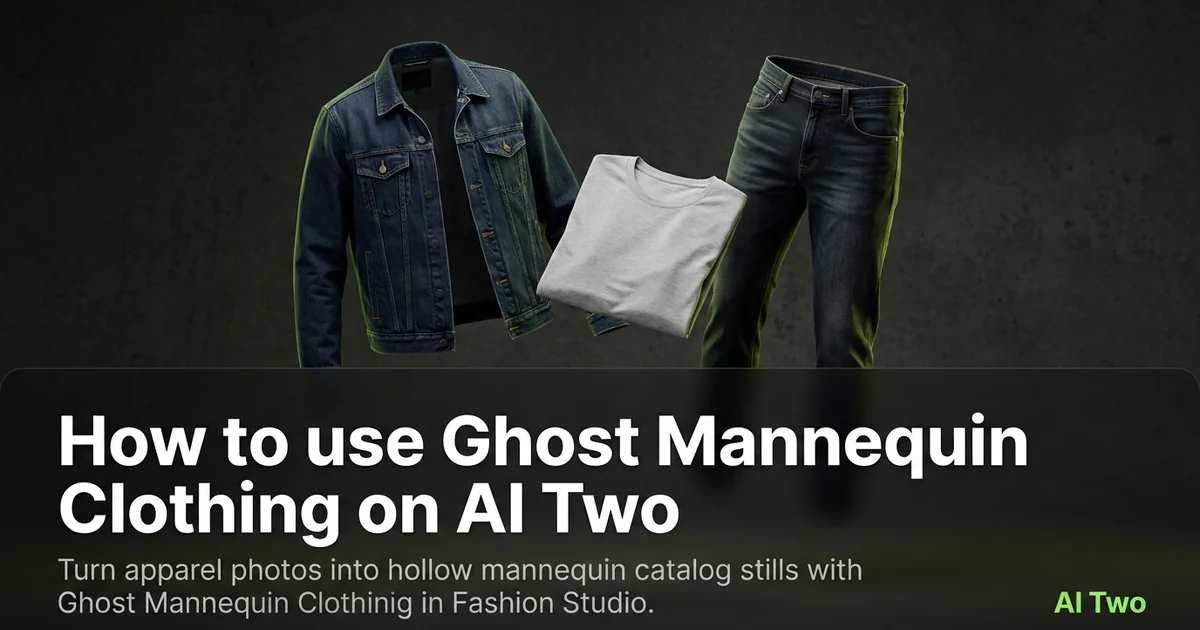
How to use Ghost Mannequin Clothing on AI Two
Turn apparel photos into hollow mannequin catalog stills with Ghost Mannequin Clothing in Fashion Studio.
Read guide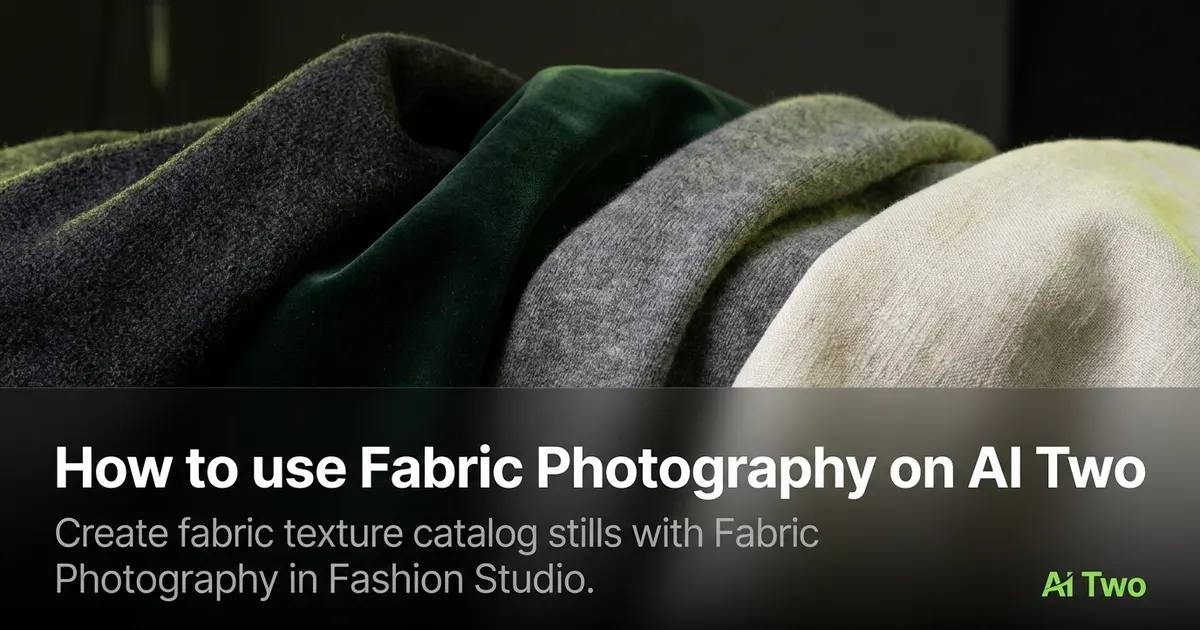
How to use Fabric Photography on AI Two
Create fabric texture catalog stills with Fabric Photography in Fashion Studio.
Read guide