
How to create a WiFi QR Code on AI Two
Generate a scan verified WiFi QR code for guest networks and venues. Free in QR Studio.
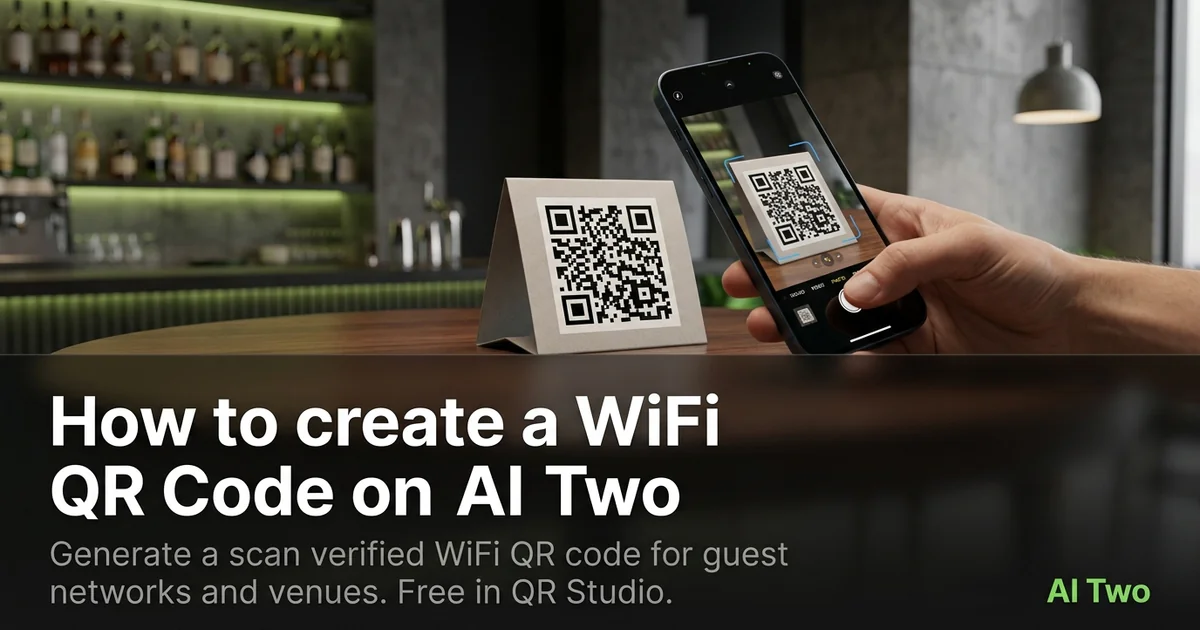
WiFi QR codes on AI Two live in QR Studio essential tools. I open WiFi QR Code when a cafe counter, rental unit, or event lounge needs guests on the guest network without dictating a long password aloud. Every code is scan verified before download. When I tested a venue guest SSID on a matte table tent, both phones joined the network under warm bulbs after I sized the code for arm length scanning. I regenerate the PNG whenever IT rotates the guest password or SSID name so old tent cards do not send people to a retired network. Credits meter each generation. Free signup credits covered several proof sizes for me before a larger print run on a paid plan. I treat WiFi codes as operational signage, not a promise that the network stays private forever. Passwords change, staff turnover happens, and guest VLANs get rebuilt. The QR is only as current as the credentials you enter today.
What a WiFi QR code does
You enter the network name, password, and security type the form asks for, generate a QR image, and download a scan verified PNG for print or screen. Compatible phones read the pattern and offer to join the WiFi network without manual typing.
When I tested a guest SSID at a small hotel front desk, the scan opened the join prompt on both Android and iOS without staff spelling special characters.
Credits apply per generation. I lock SSID, password, and security type first, then pick size and contrast styling if the form offers it.
Stay in QR Studio for URL, menu, PDF, and social generators when the destination is not WiFi credentials.
I treat WiFi codes like seasonal signage. If operations changes the guest password, I regenerate and reproof every printed piece.
Scan verification catches broken patterns before download. I still proof on paper at final size under venue lights.
In my experience, a short call to action beside the code helps guests know the scan joins WiFi, not a website or chat thread.
For rental turnovers I date the filename so old welcome cards are not mixed with a new guest VLAN after IT updates routing.
I keep a printed proof in the operations binder so weekend staff scan the same code guests see on the counter.
When a pop up booth runs for one weekend only, I still export at the final print width the vendor quotes instead of stretching a small PNG later.
I write the SSID name and month on the proof margin so staff retire inserts when the password rotates.
How to run it step by step
Step one: confirm the published guest SSID, password, and security type with whoever manages the router. Step two: open WiFi QR Code in QR Studio. Step three: enter the fields exactly, generate, wait for scan verification, download. Step four: print or embed at the size you need. Step five: scan with two phones and confirm the device actually joins before a large print run.
I keep a screenshot of the router guest settings page in the project folder beside the PNG, redacting anything that should not travel with the art file.
Store the file with the venue name and credential version in the filename notes, not the raw password in shared drives unless your policy allows it.
If IT changes the password, regenerate. Do not edit modules in a layout app.
When I proofed a window cling, afternoon sun glare was the real test, not the monitor preview.
I note print width in millimeters beside the filename for vendor reorders.
If one phone struggles, I enlarge the art ten percent and regenerate.
I add the SSID in plain text under the code for guests who prefer typing on slow networks or older phones.
I proof once on iOS and once on Android before I approve a tent run. One platform can fail while the monitor looks fine.
Credits apply per generation, so I lock the network payload before I explore color styling options.
When the counter also needs WhatsApp support, I keep a separate WhatsApp QR in the same folder instead of forcing one generic link.
Print and placement tips
Use high contrast modules on a light field for table tents and lobby cards.
Matte stock reduces glare. Glossy cards can mirror pendant lights into the camera.
Size for the real viewing distance. Guests often scan from arm length while seated or standing at a counter.
Leave a quiet zone free of logos and food photography.
Place the code where thumbs naturally reach on a table tent. Corner placement on folded stock fails in the wild.
Test under the lighting that matches the dining room or lobby, including warm restaurant bulbs.
Avoid printing over busy plate photography without a white sticker island.
For outdoor patio service, bump module size and quiet zone because phone cameras struggle under mixed string lights.
Older cameras need bigger quiet zones than new flagships, so I size for the weakest phone I expect at the venue.
If the card sits behind glass, proof through the glass at the angle guests use, not only flat on a desk.
Mistakes I avoid
Publishing the main office or staff VLAN on public signage. I use a guest network with a policy IT approves for visitors.
Skipping the phone proof because the PNG verified on screen.
Printing five hundred tents before a two phone join test.
Saving a low resolution PNG and upscaling in the layout app.
Mixing QR art with heavy dither textures that eat module edges on press.
Telling guests the network will stay secure forever. Passwords rotate, devices get lost, and policies change. I reprint when IT says so.
Embedding the household master password on Airbnb welcome cards when a dedicated guest credential exists.
When to use another QR tool
Need a plain website link? URL QR. Need a PDF menu file? PDF QR. Need plain text without joining WiFi? Text QR. Need a contact card? vCard QR. Need WhatsApp chat? WhatsApp QR. Need a hosted menu page instead of credentials? Menu QR in the essential cluster.
The essential types cluster guide maps sibling pages. The QR Studio pillar maps social and contact tools when the job is not guest WiFi.
Business cards that promote several contact paths sometimes need separate codes per channel instead of one generic link.
If you need scan counts by campaign, use dynamic codes in My QR Codes rather than a static WiFi PNG alone.
After the download
I attach the verified PNG to the print vendor ticket with quiet zone notes so prepress does not crop modules.
For dining rooms I schedule a lunch hour scan test after install when foot traffic and lighting match peak service.
If IT rotates guest passwords seasonally, I date the filename and retire old tents so staff do not post outdated credentials.
I keep a change log beside the PNG in the project folder for quick audits when a guest reports a failed join.
Weekend staff sometimes swap table creative without telling marketing, so the binder proof is the source of truth for which code is live today.
I store the SSID name in a text file beside the image so future teammates know which network the tent opens without opening design files. I keep passwords in the secure channel IT prefers, not in public folders.
FAQs
Related studio guides
How to create a Link QR Code on AI Two
Generate a scan verified website link QR code for print and signage. Free in QR Studio.
Read guide
How to create a Menu QR Code on AI Two
Generate a scan verified restaurant menu QR code for tables and windows. Free in QR Studio.
Read guideHow to create a Link QR Code on AI Two
Generate a scan verified website link QR code for print and signage. Free in QR Studio.
Read guide