
How to create a Black QR code on AI Two
Generate a high contrast black QR code in QR Studio when scan reliability matters more than brand color ink.
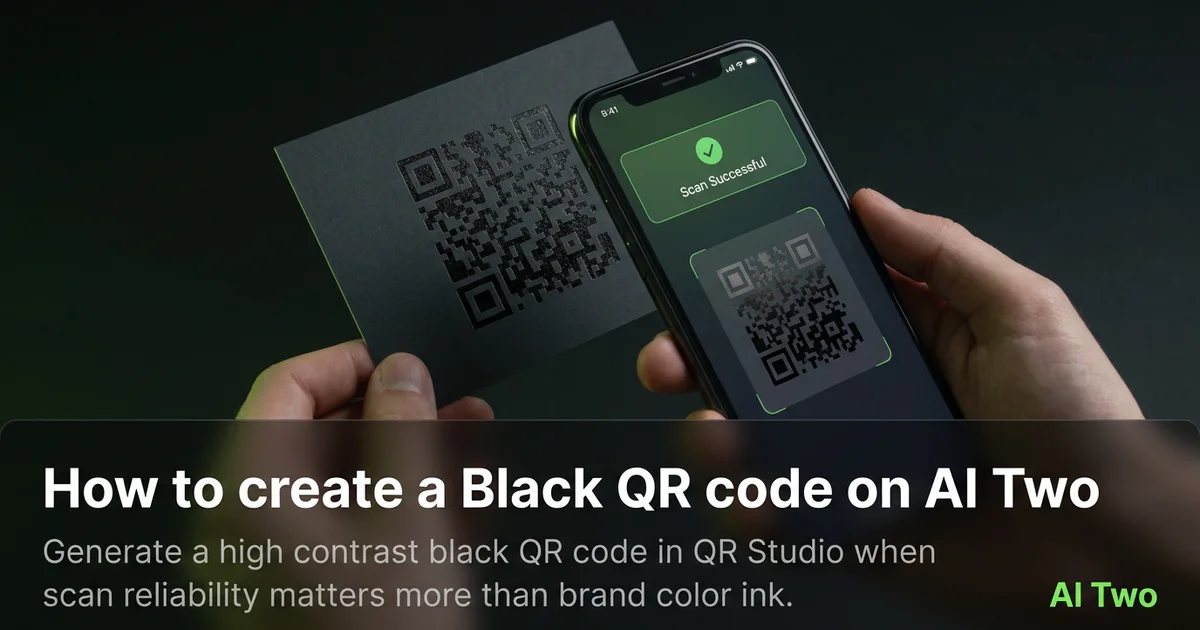
Black QR codes on AI Two are the safe default in QR Studio when I need maximum contrast on light paper. I open the Black QR Code page after the payload is proven on another type page, or when the brief allows classic black modules. Every code is scan verified before download. When I tested black modules on a kraft lunch sleeve, both phones read the code under fluorescent cafe lights while a pale gold sample failed.
What a Black QR code does
You generate a black module pattern for the content type you need, with scan verification before download. Black on a light field remains the most reliable print combo I use.
When I tested black versus pale gold on kraft, black won on both phones under store lighting. Gold looked premium on screen and failed on paper.
Credits apply per generation. I lock payload and size first, then decide whether brand color is worth a second pass.
Stay in QR Studio for colored and black generators.
I treat black as the control sample for every print program. If black fails, color will not save you.
Black modules also make it easy to compare two payload versions side by side on one proof sheet before you pick a winner.
How to run it step by step
Step one: know the payload type and final destination. Step two: open Black QR Code or generate black modules from the matching content page when that page already outputs black. Step three: generate, wait for scan verification, download. Step four: print a small matte proof and scan with two phones.
I treat black as the control sample. If black fails, the problem is size, quiet zone, or payload, not ink color.
Store the PNG with the payload string in the filename notes.
If marketing later demands brand color, open the colored QR cluster and keep contrast strong.
When I proofed a cafe menu, black on white matte passed both phones before we discussed teal accents.
I note the print width in millimeters beside the filename so reprints at a new vendor keep the same module size.
If one phone struggles, I enlarge the art ten percent and regenerate before I touch ink color.
Print tips for black codes
Use light fields and clear quiet zones. Black on dark navy still fails.
Matte stock reduces glare. Glossy black can mirror lights into the camera.
Size for the real viewing distance, not the artboard.
Proof under the venue lights you will actually use.
Leave a quiet zone free of logos and patterns. Crowding kills scans even when the file verified.
I avoid hairline print sizes on kraft bags. Bigger modules win in low light.
In my experience, a white sticker island on a dark bag beats printing black modules directly on a busy pattern.
Test under the same phone models your audience uses. Older cameras need bigger quiet zones than new flagships.
Mistakes I avoid
Skipping the phone proof because black always works. Size still matters.
Placing black modules on busy dark photography.
Recoloring before the payload is final.
Printing five hundred stickers before a two phone test.
Saving a low resolution PNG and upscaling in the layout app. Start from the verified download at final print size.
Mixing black QR art with heavy dither textures that eat module edges on press.
When to use another QR tool
Need brand hues? Open the colored QR cluster after black proves the payload. Need WiFi or menus? Essential types. Need repair or dynamic tracking? Fix and track.
The colored QR cluster guide maps orange through white options. The QR Studio pillar maps everything else.
Business deep links like App Download still need the correct payload page even when the ink is black.
When marketing asks for orange or white modules, I keep the black proof in the project folder as the reference scan that already passed.
FAQs
Related studio guides
How to create an Orange QR Code on AI Two
Generate a scan verified orange QR code for print and signage. Free in QR Studio.
Read guide
How to create a Blue QR code on AI Two
Generate a scan verified blue QR code in QR Studio when your brand needs blue modules and strong print contrast.
Read guide
How to create a Pink QR Code on AI Two
Generate a scan verified pink QR code for print and signage. Free in QR Studio.
Read guide